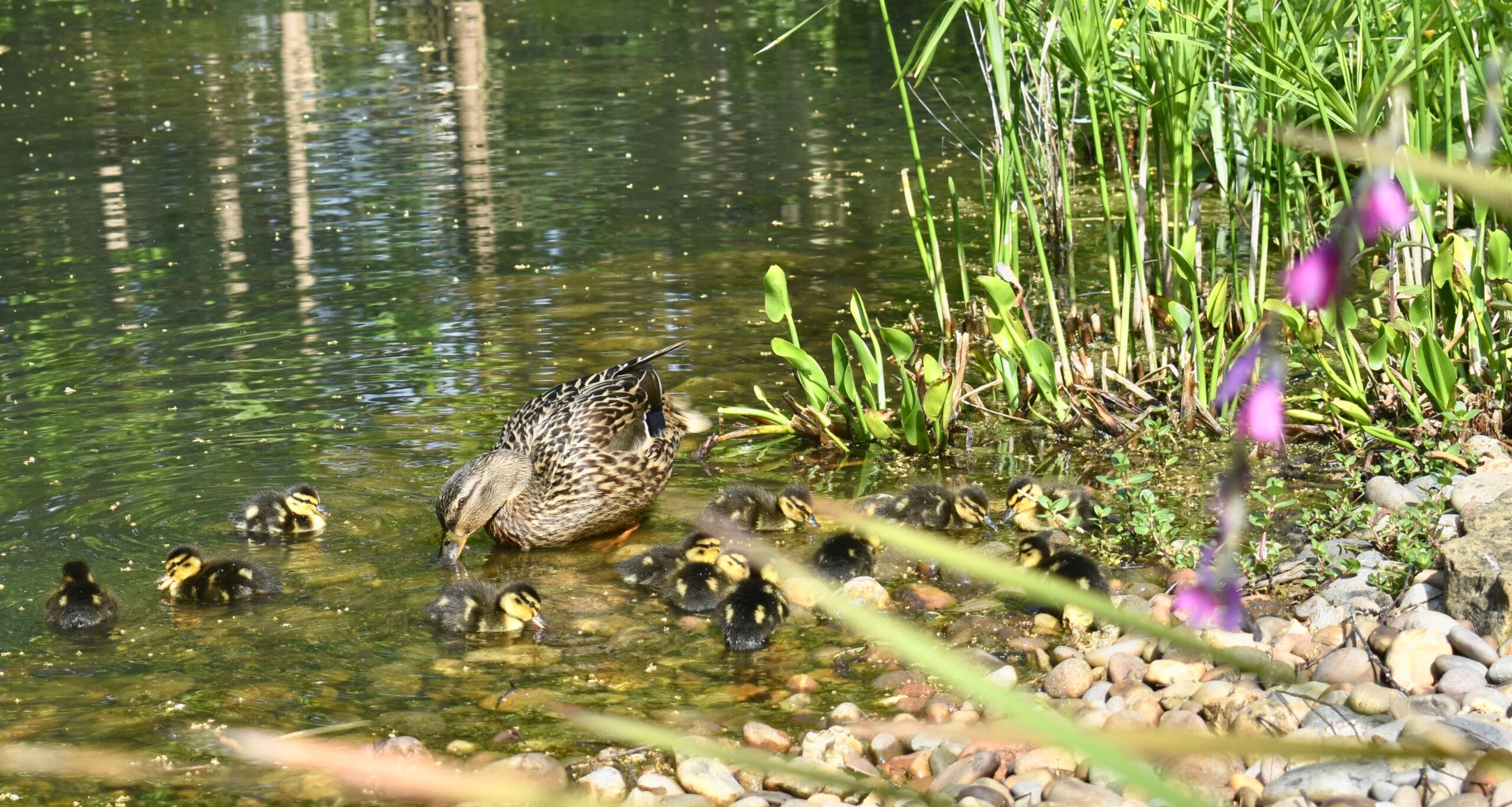
Above: A recent family of ducks enjoying a sunny morning in the Pond.
Although visitors often come to Denmans for its history, planting design and peaceful atmosphere; the garden is also home to a rich bird population. The garden’s mixture of mature trees, dense shrubs, open spaces, water features, winding gravel paths and naturalistic planting provides food, shelter and nesting opportunities for a wide variety of bird species. Before people arrive, the garden is full of birdsong and activity. Earlier this Spring, before the garden was open, I walked a circuit with the Merlin Bird ID app. By the end of the loop, the app had identified 22 different species; This proves just how much birdlife the garden supports and how important a well managed garden can be for wildlife. It was a fascinating exercise and one I perform frequently now.
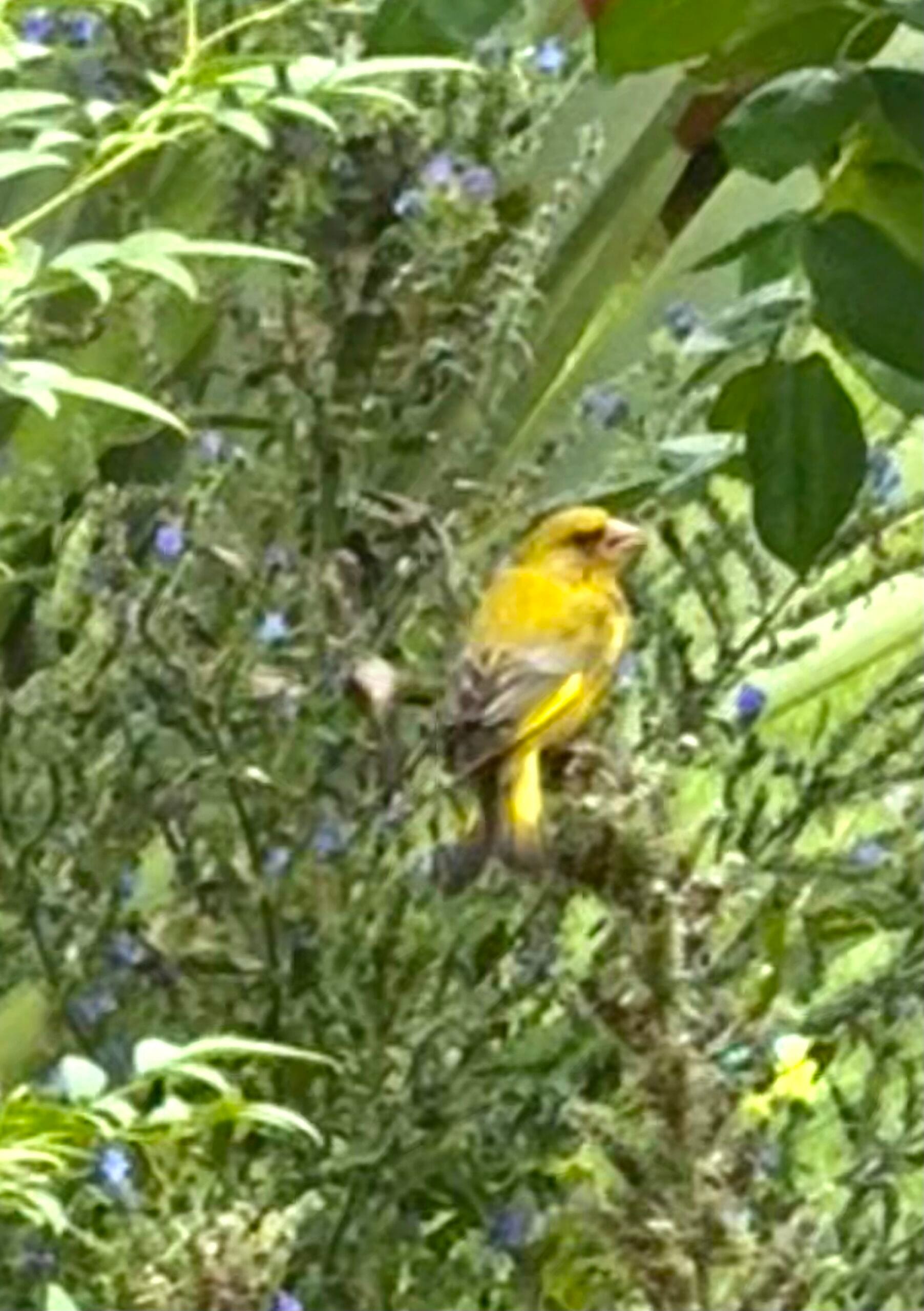
A rare photo of an elusive finch by the Clock House at Denmans.
The birds recorded around Denmans reflect the wide range of habitats found within the garden. Some species are easy to spot while others are more often heard than seen. Robins will follow us gardeners around in search of worms; blackbirds can be seen messing up recently mulched borders and Thrush habitually forage on the lawns. Our wrens and dunnocks can be heard chirping but tend to stay under the cover of dense planting, where they can find food and shelter. Three species of finch live here (gold, green and chaff) and they seem to prefer the northern portion of the garden! The great tits and blue tits manage to monopolise the feeding stations. Both green and great spotted woodpeckers have been recorded at Denmans year after year using the mature trees for feeding and nesting opportunities.
Three times I have left the Walled Garden leading into the Meadow and a green woodpecker flies off ahead of me in its distinctive undulating manner; straight into the Metasequoia on the southern tip of the garden. Seeing it so frequently has become a birdlife highlight for me in my time at as a gardener at Denmans. Larger species attracted to the garden include doves, pigeons, crows, and magpies. Easier to spot, uninhibited and making use of all parts of the garden! A few times, my Merlin app has registered a goldcrest, usually near the Woodland Walk. I haven’t ever seen one but this should check out as I have read that they prefer conifers.
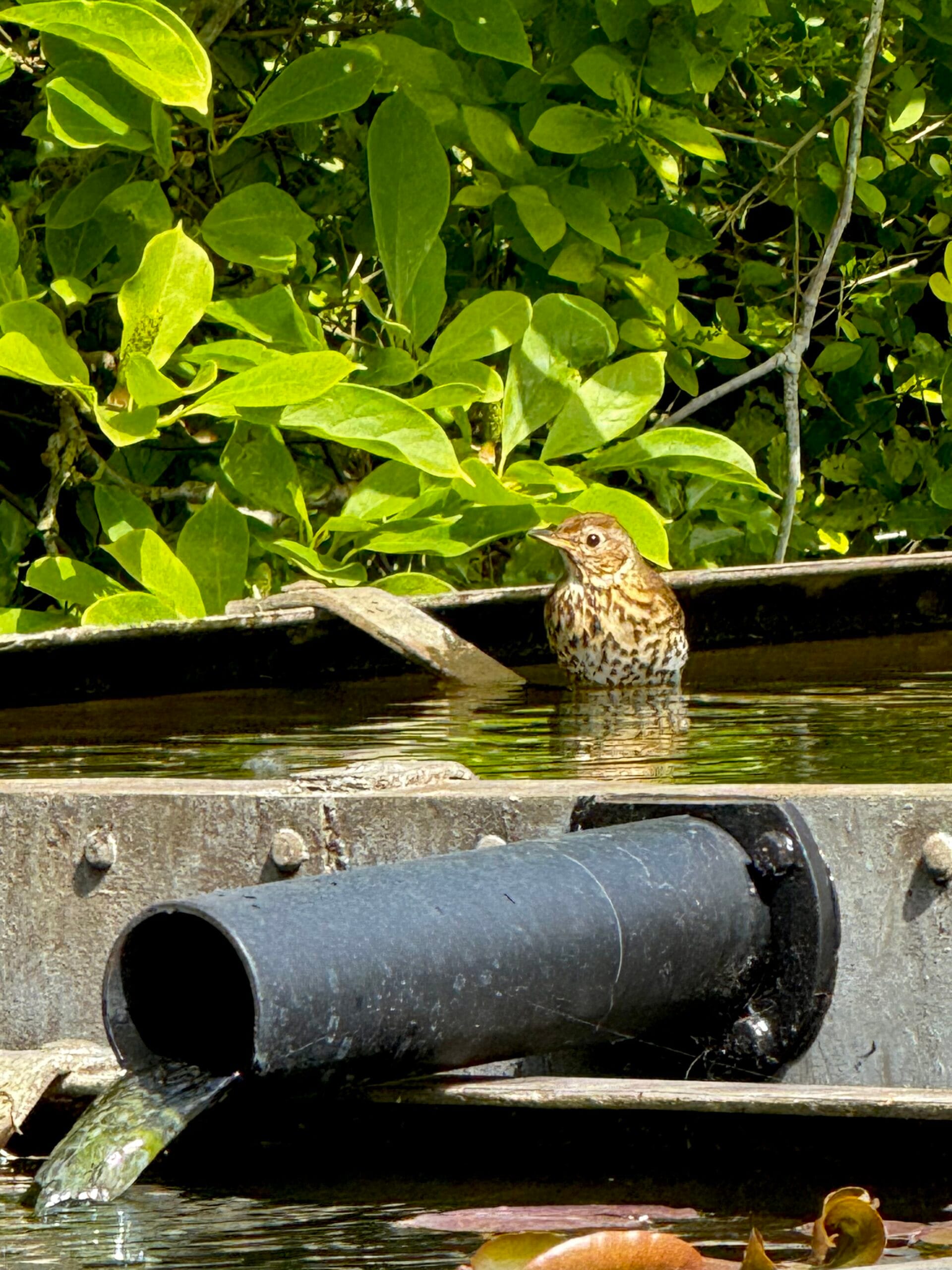
A song thrust drinking from the water tanks by the Cucumber House.
So, what efforts do we employ to support and maintain this level of activity and diversity?
One of the biggest advantages Denmans has for birdlife is its large number of mature trees. Thanks to the gardens long history, many trees have had decades to establish and give then shelter from weather and safe nesting sites. Below these big trees, the garden has a wide variety of shrubs and densely planted borders. This layered structure gives them a range of potential habitats to choose from where they will find food sources and protection. Additionally, we have created a dead hedge in the Woodland Walk with our winter pruning debris and planted a mixed hedgerow around our plant stock and propagation areas.
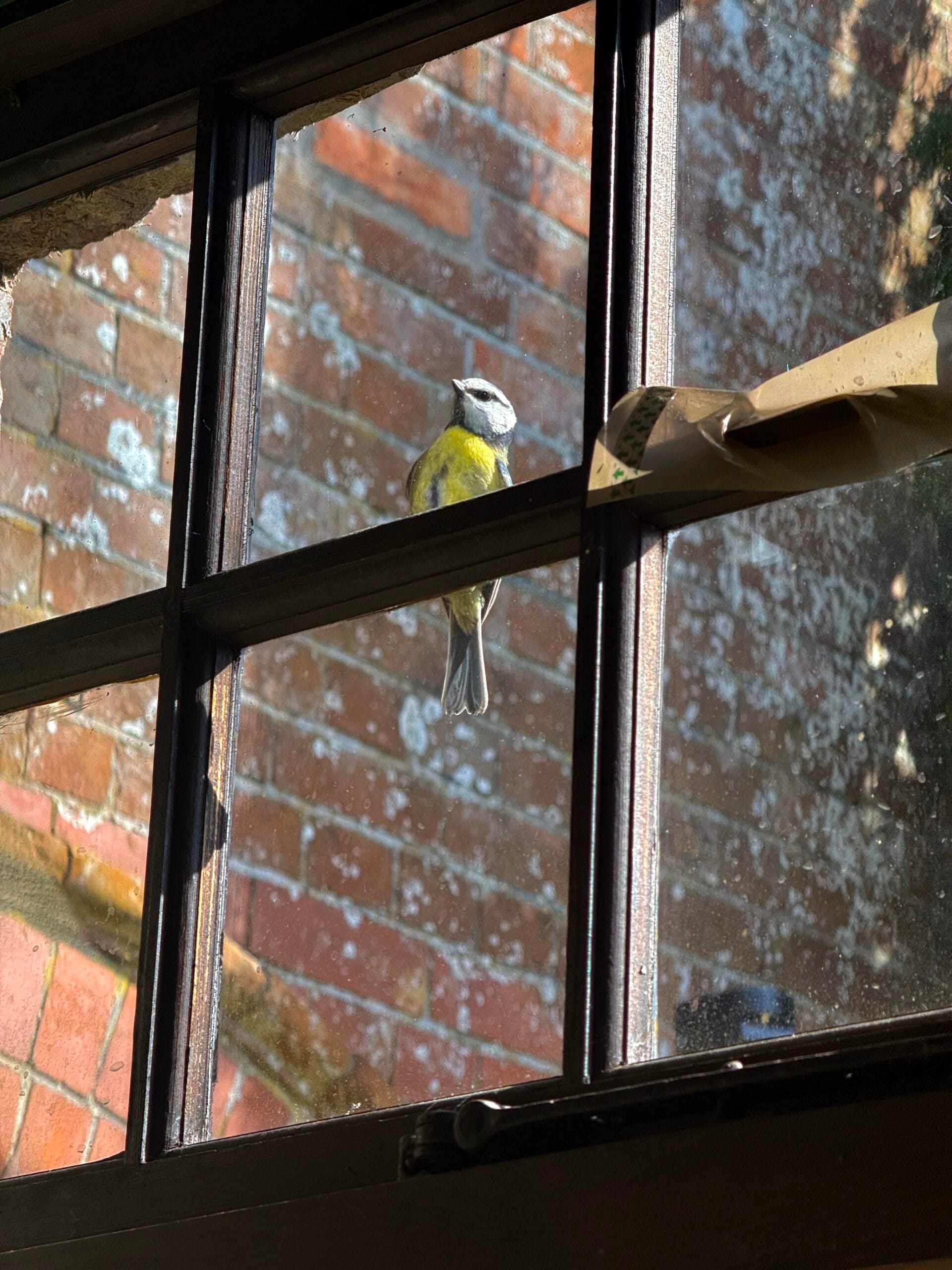
A blue tit tapping on the window at Clock House.
Much of the feedback we receive from our visitors notes the wide variety of plants within the garden. Earlier in the year, the dry riverbed, originally designed and installed by Joyce Robinson, was renovated. The Head Gardener, Ryan Bodsworth, was very careful in his planting choices – Primula veris, Dianella revoluta coolvista, and Cirsium rivulare to name three. All selections had to be ‘insect friendly’, promoting biodiversity and providing a food source for our bird community. Through the winter months, several feeding stations are assembled and we also leave our seed heads standing, more food for finches but also adds winter interest and so our visitors benefit as well!!!
In past years, autumn leaf fall was collected and stored to make leaf mould; now, much of it is blown directly onto the borders where we leave them to break down naturally. This practice has a threefold benefit. For myself as a gardener, it is time (and back!)-saving, improves our soil structure and again more food for the birds as insects and other invertebrates relish this practice!
Denmans has two ponds on its site and given the recent muchas hot, dry summers (and scorchio May last month!), birds need water during these uncomfortable temperatures as much as gardeners. Ducks fly in and out on a daily basis, to drink and bathe helping them to stay healthy in warmer weather.
With the exception of Buxus caterpillar control, Denmans has decided to no longer use insecticides nor herbicides. We believe this more natural approach can only help to create a healthier ecosystem throughout the garden. Better for everyone involved.
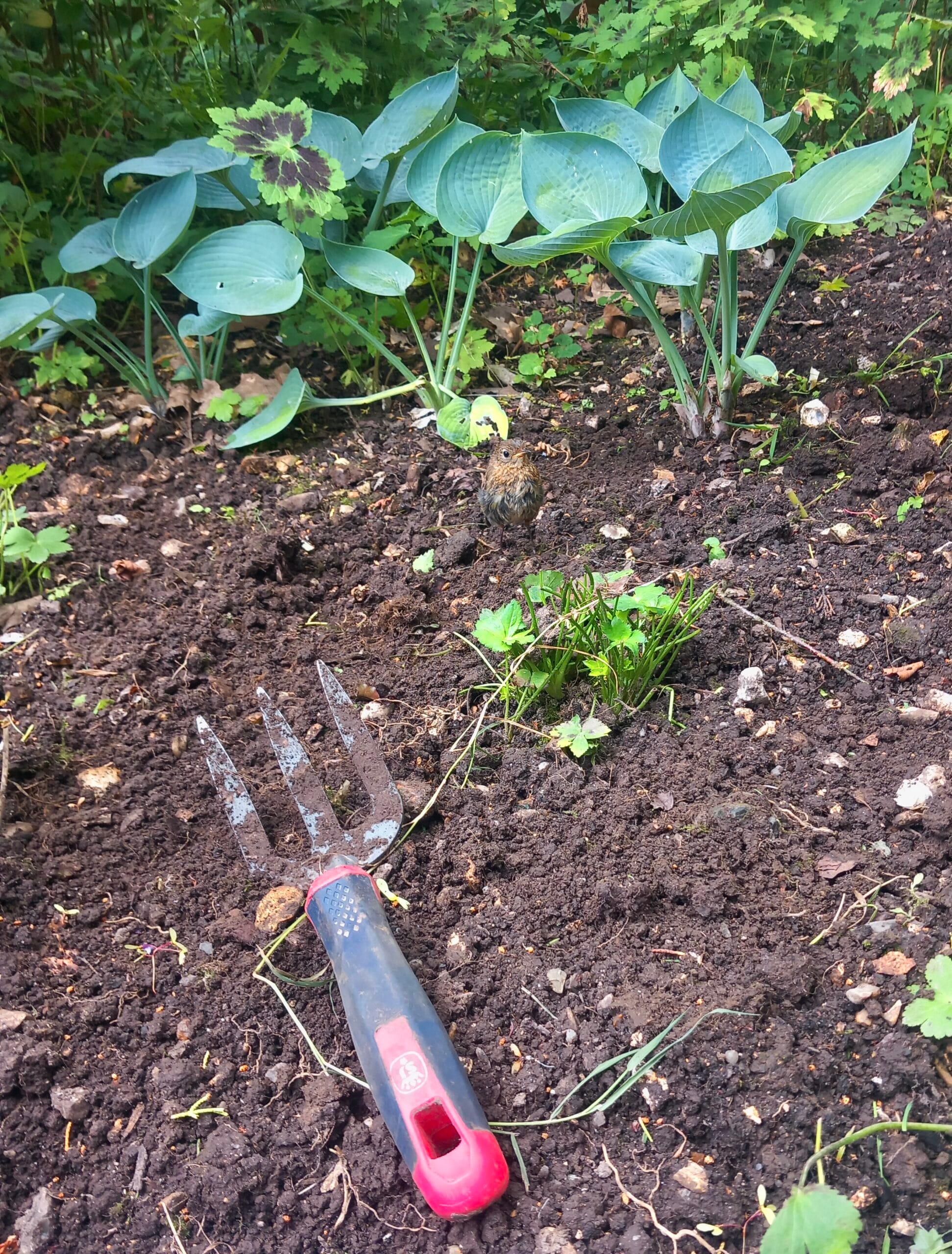
A cheeky baby robin supervises Karen’s work in the Acer Walk.
It’s common knowledge that bird populations in West Sussex are being challenged by the loss of their natural habitats; this is particularly relevant in the local area of Denmans where new houses are being built on land that was previously fields and open countryside. The 22 bird species identified on a single walk around the garden demonstrate, I reckon, how important a refuge Denmans is for birds and other wildlife. The birds bring life, movement and song (especially at eight o’clock in the morning!) to the garden and contribute to making Denmans such an enjoyable place to work and visit; just yesterday, a speckled baby robin decided to have a mud bath a foot away from my knees on Acer Walk.