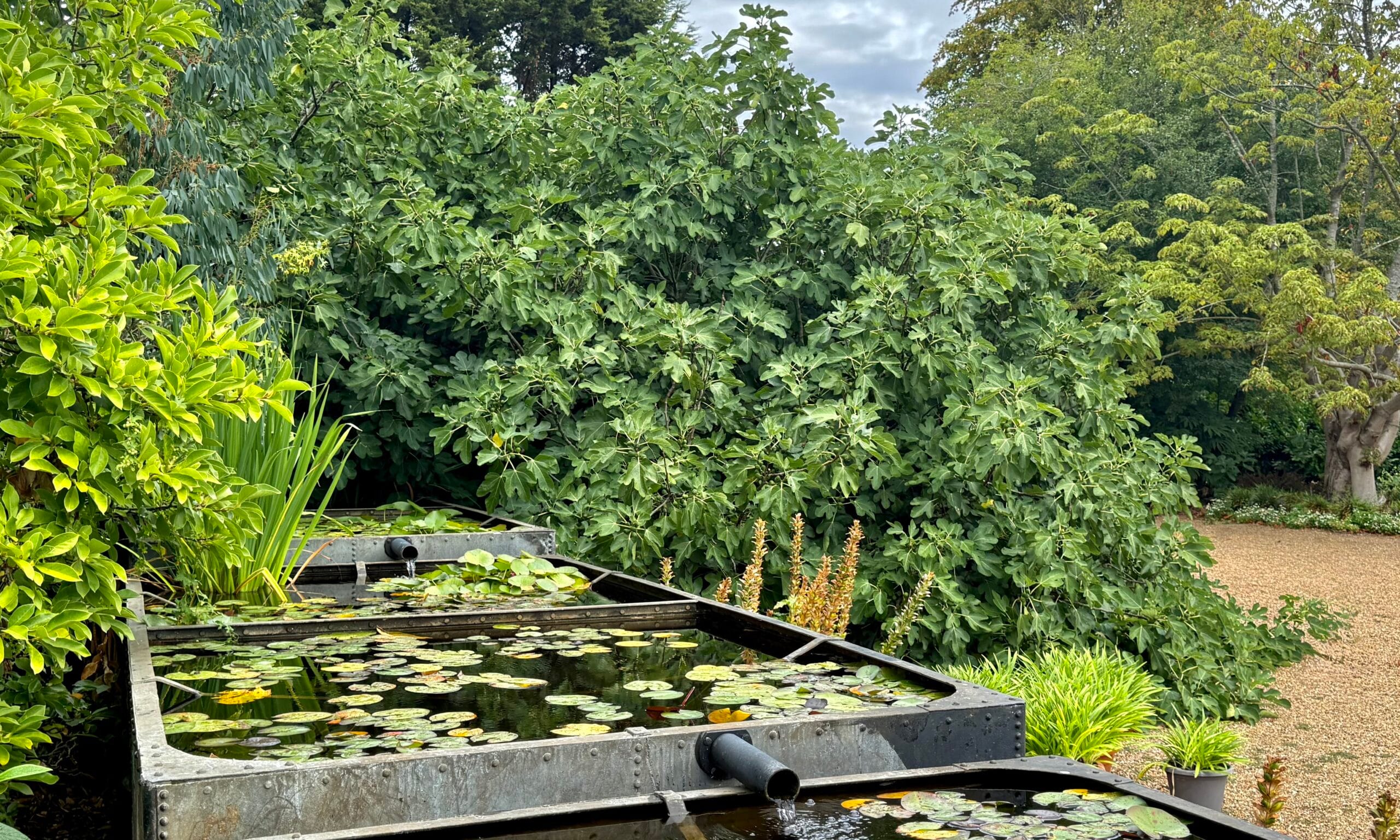
ABOVE: The largest fig tree at Denmans stands at the end of the water tanks near Midpines Cafe. It could be as much as 100 years old.
Although the garden as we know it now at Denmans date back to the late 1940s, the site was part of a large estate called Westergate House and served the kitchen garden for over a century.
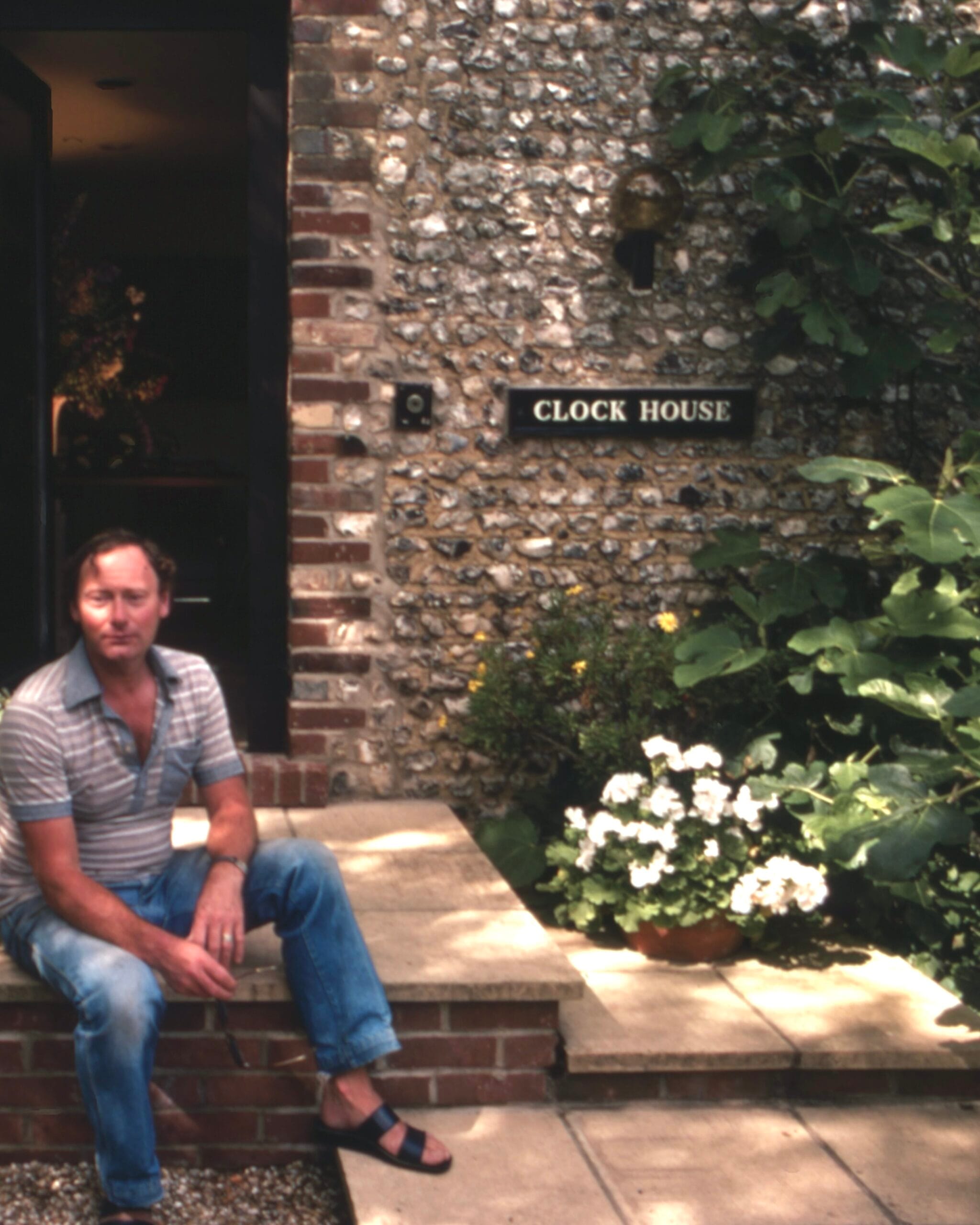
John Brookes MBE sitting on the front steps of Clock House at Denmans Garden. One of three old fig trees on the property is to his left.
The walled gardens, the glass houses, the Cottage, and the Clock House are all vestiges of the old estate as are three of the garden’s fig trees. One is tucked into a corner at the top of the Walled Garden and is kept very small. Another stands at the southwest corner of the Clock House. And the largest sprawls at the top of the water tanks near the café. Aside from their age (we can only guess they are at least a century old) they are architecturally fantastic and generously produce figs through the late weeks of summer.
In fact, fig trees are remarkable for their longevity and resilience. They are among longest cultivated plants, apparently grown in the Middle East as long as 11,000 years ago, and can live for well over a hundred years. Some specimens, including examples in the Mediterranean and the Middle East, are reputed to be several centuries old.
Their hardiness comes partly from a deep and vigorous root system and partly from the plant’s sheer genetic adaptability, which has allowed it to be cultivated successfully across wildly different climates. In general, although figs thrive in warm, sheltered locations (south- or west-facing wall is ideal) they are considered hardy to -15°C (5°F).
These deciduous trees thrive in well-draining, poor-to-moderate, soil. Our largest fig, as it happens, grows on the remains of a rocky road bed where we have never watered it so once established fig trees are fairly drought tolerant.
Figs fruit best when their roots are constrained which stunts their growth. It was traditional plant them in a lined pit or large container, since overly vigorous root growth often leads to lush leaves but little fruit. Our trees are definitely exceptions to this rule!
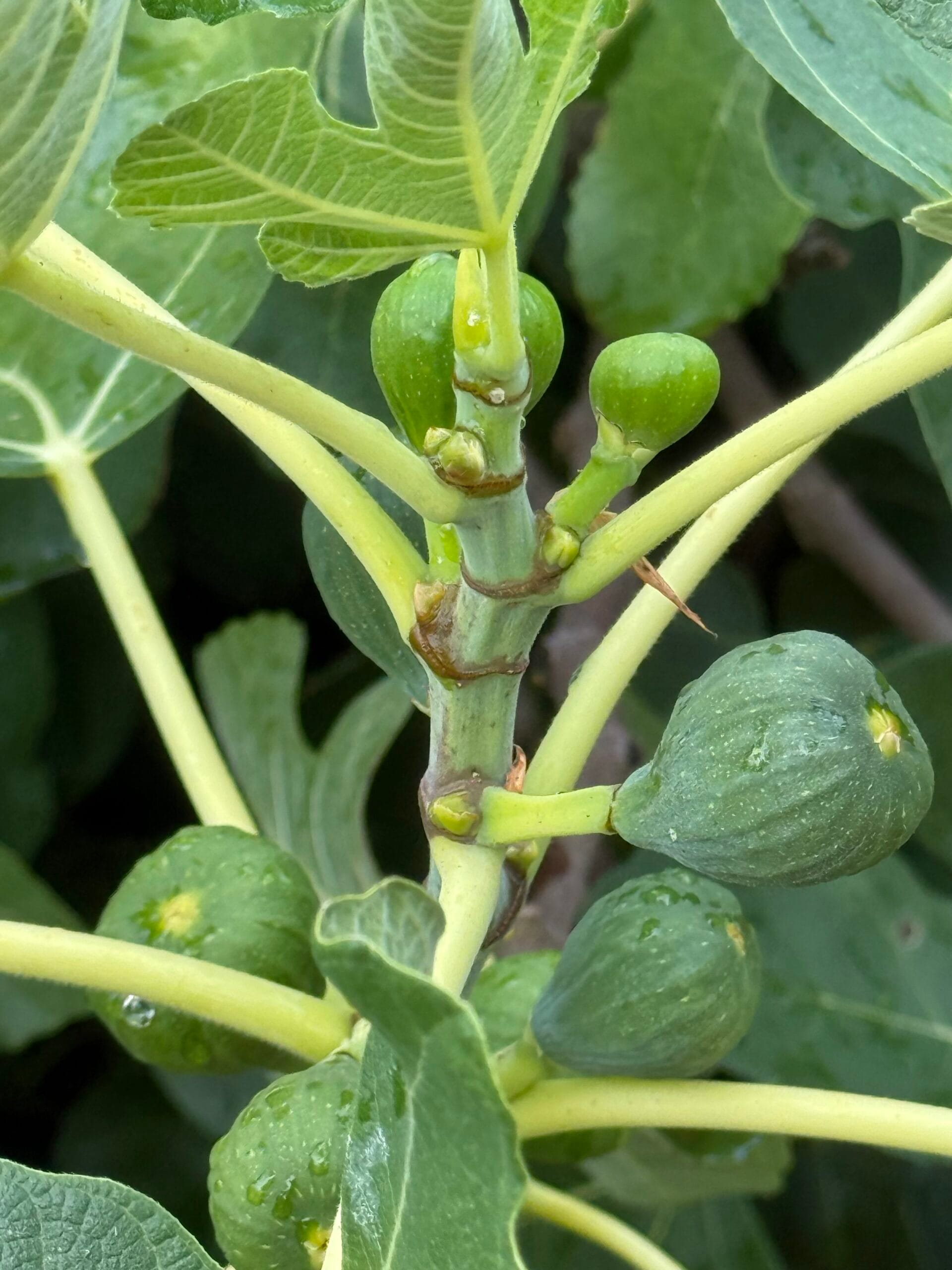
These figs which have been swelling over the summer months won’t ripen before winter and should be removed. The breba crop are the small bumps depicted here and will make up next year’s harvest.
Amazingly, while figs in their native lands depend on a tiny fig wasp for pollination, fig trees in Britain and elsewhere where there are no fig wasps are parthenogenic meaning they develop fruit without any pollination whatsoever. The trade-off of this phenomenon is that any pips found inside a British-grown fig are sterile — the fruit ripens beautifully, but it can’t grow a new tree. Who knew?
Interestingly, the green figs that often appear at the end of summer and linger through winter never ripen into mature fruit and should be removed. What matters instead is the breba crop — the tiny, pea-sized buds that form in autumn and go on to ripen the following summer. Care should be taken during winter pruning not to remove too much of this crop, or you’ll lose next year’s fruit before it’s had a chance to develop.
The genus name Ficus is the classical Latin word for “fig” or “fig tree,” and its own roots may reach back to an ancient Hebrew word for the fruit. The species name, carica, refers to Caria, an ancient region in southwestern Turkey renowned in antiquity for the quality and abundance of its figs — making Ficus carica, quite literally, “the fig tree of Caria.”
Denmans’ fig trees are more than architectural features. For us they are a direct, living link to the walled kitchen gardens that stood on this site well before the current garden existed.
It is amazing to think we are enjoying the same fruits that were enjoyed by those who planted them.