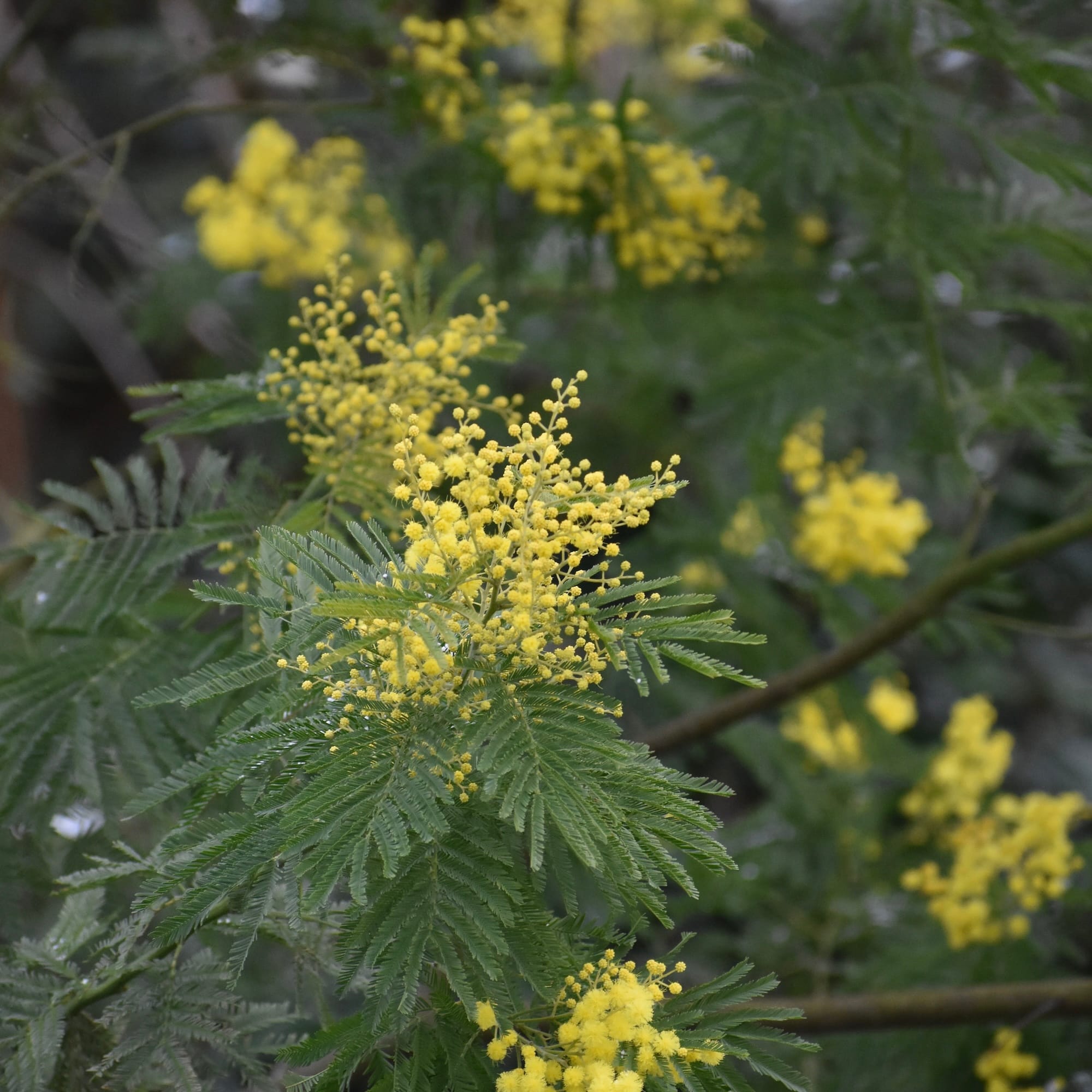
Mimosa’s soft sprays of bright yellow flowers brighten up the winter landscape.
There is nothing that brightens a dreary winter’s day better than chrome yellow flowers or leaves: The bigger that splotch of yellow in the grey, soggy landscape, the better.
Witch hazels, carpets of winter aconites, daffodils, and shrubs with yellow leaves play this important role here at Denmans Garden, but the most wonderful of all is the early blooming mimosas or silver wattle trees. These Tasmanian natives begin blooming in early winter (this year it was in early January), bearing soft sprays of tiny, fluffy pom-pom like flowers that persist for 6-8 weeks. The rest of the year, the trees are covered with feathery evergreen leaves that provide a soft, though solid, backdrop for everything else in the garden. Both the flowers and leaves are great additions to flower arrangements as well.
John Brookes loved these trees, and I remember going to a local nursery with him in 2016 to buy them. I was astonished by how quickly they grew and to learn that in their native Australian habitat, they can grow to 12-15m (40-50 ft). This is one attribute that can be an asset, but it was just as astonishing to learn how brittle the trees can be. They are best pruned regularly to keep them from growing too quickly, or they need to be planted where they are well protected from strong winds.
Mimosas, which are deer resistant, thrive in full sun, though they can take a bit of shade, and in well-drained neutral to acidic soil. They are hardy to -5°C (23°F) so they do well here in the south of England but struggle further north. They thrive in Mediterranean conditions and will self-seed readily, so in some areas of New Zealand, south Africa, and the southwestern US they are considered invasive. Interestingly, the seeds can remain dormant for years. They will germinate after a fire, as is common in dry climates.
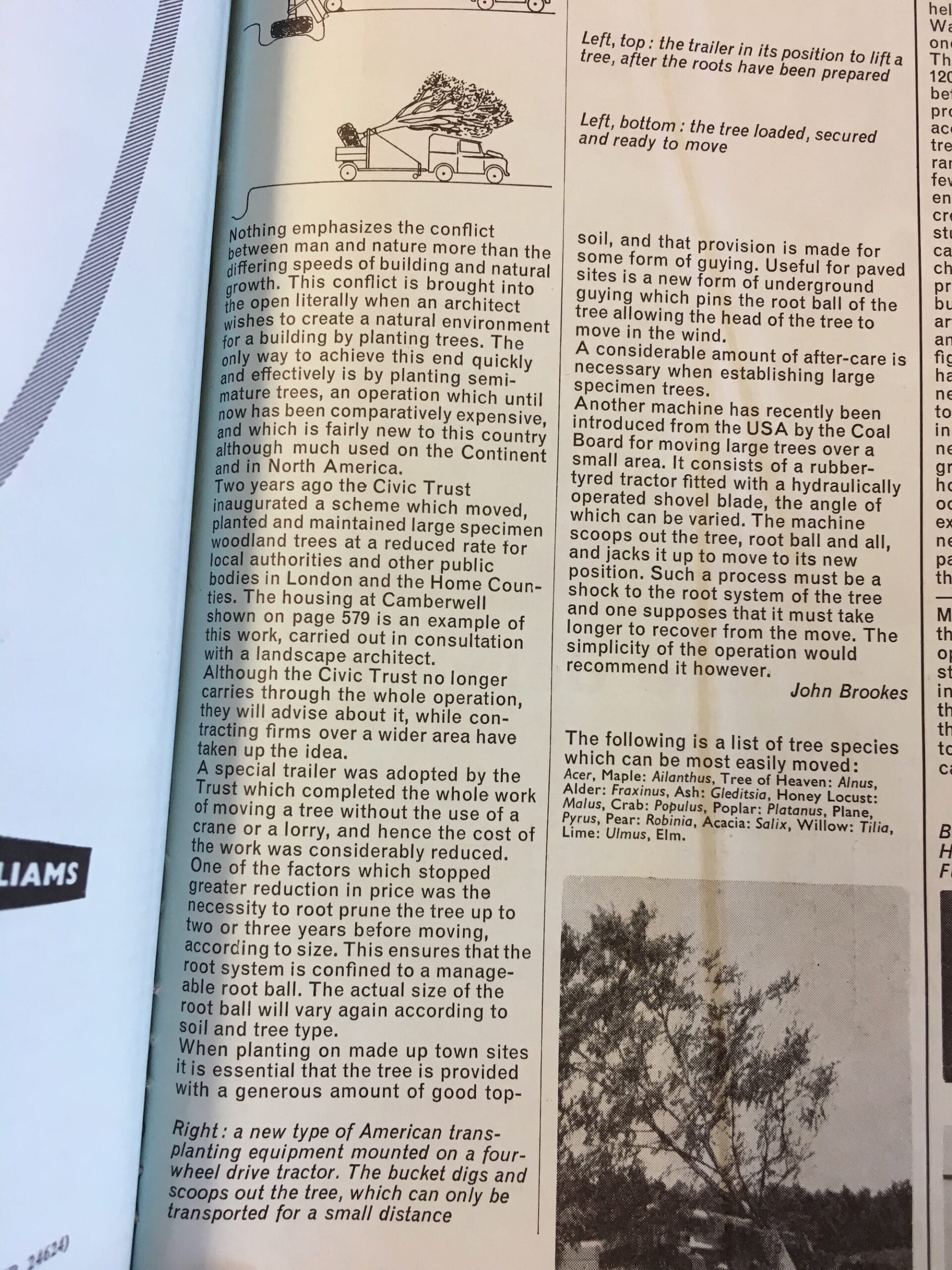
In this early 1960s article John Brookes wrote for ‘Architectural Design Magazine’, he notes that newly developed equipment made moving large trees much easier, including mimosas.
While the common name is mimosa, this species is not in the mimosa family. Its Latin genus name, ‘Acacia’ derives from Greek word for ‘pointed object’ or thorn (these trees are not thorny!) and the specific epithet, ‘dealbata’, derives from the latin word for ‘whitewashed’ or ‘covered in white powder. This refers to the faint slivery-white coating on the new growth, branches, and foliage of the tree.
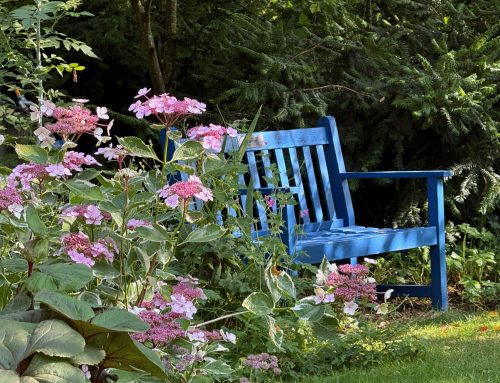
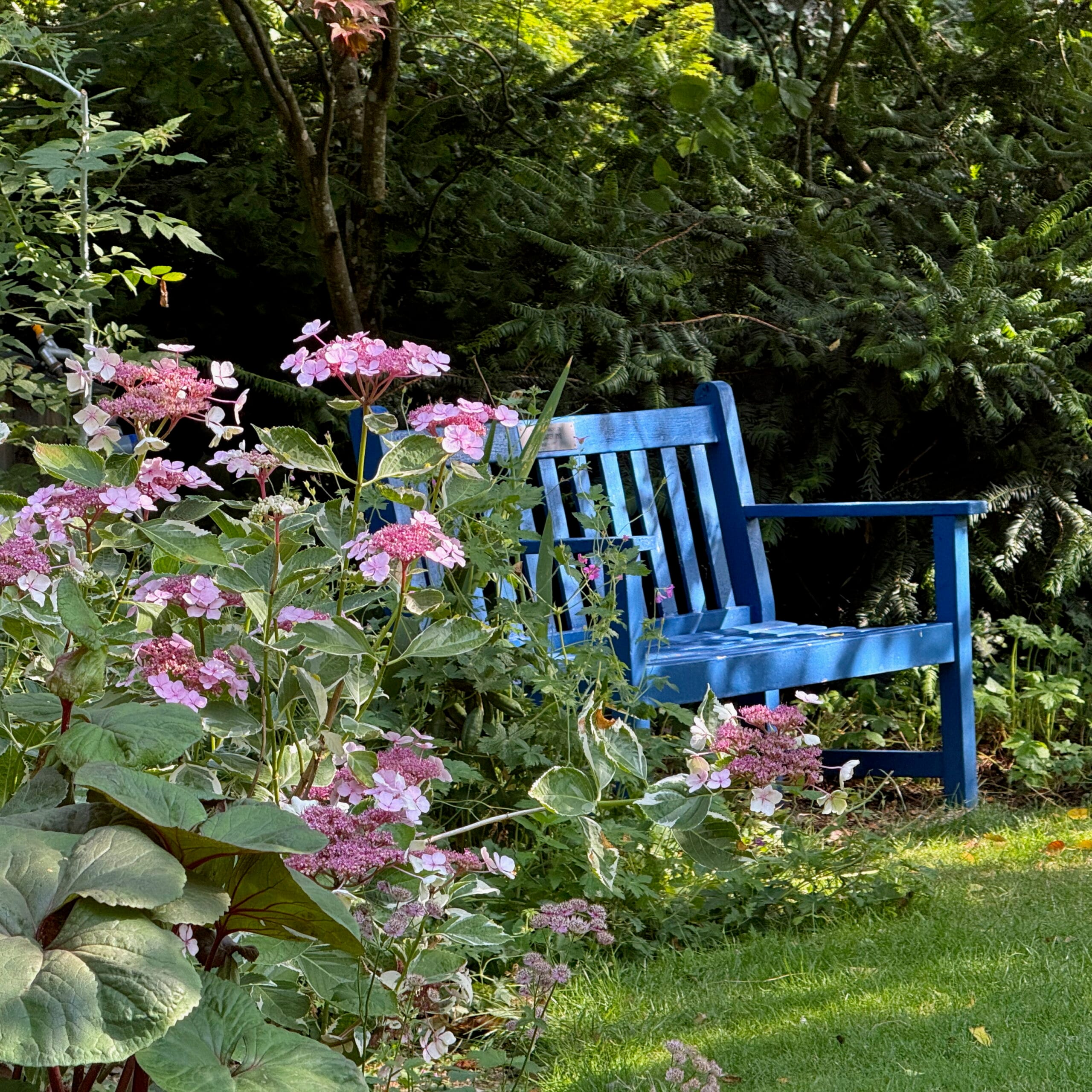
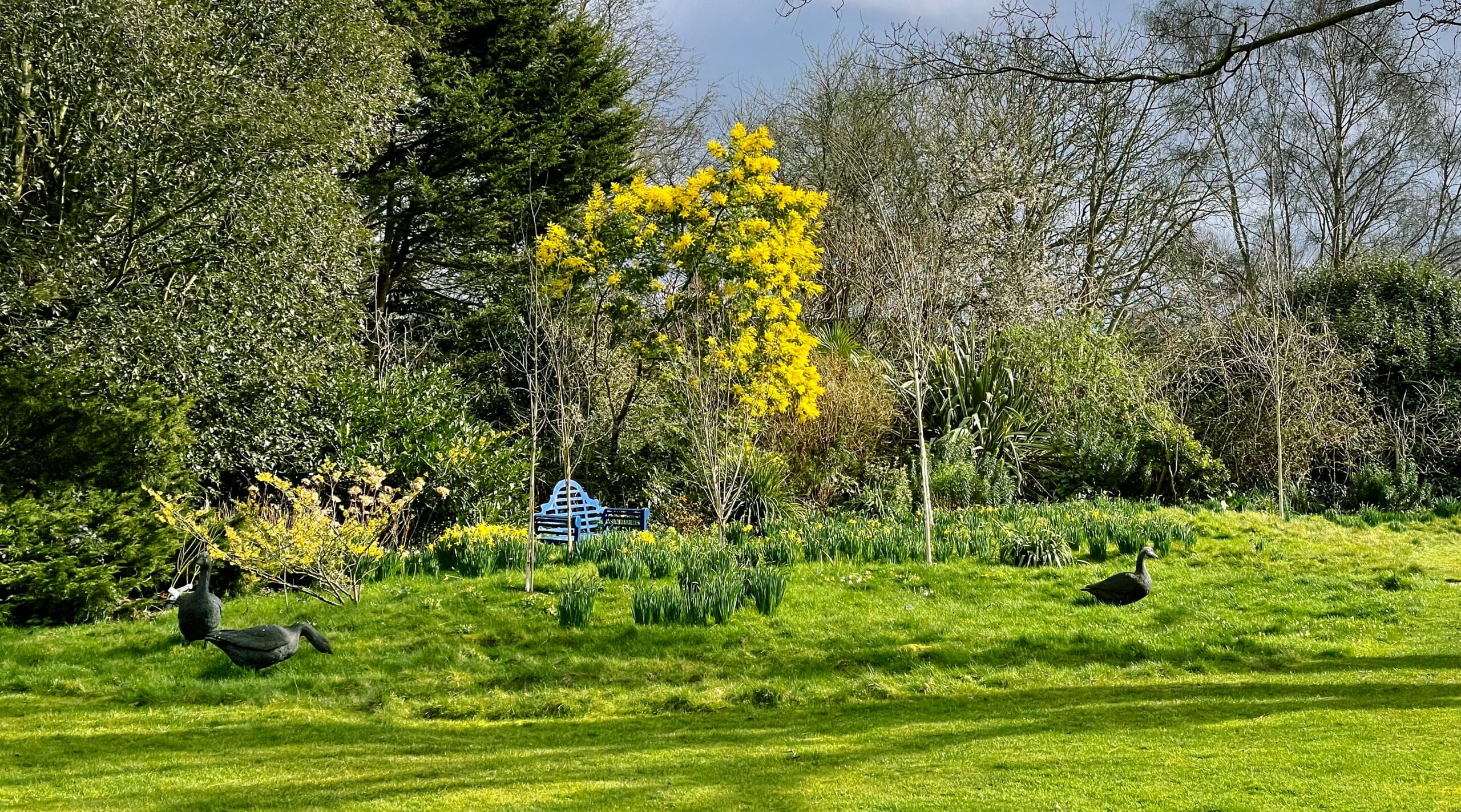
John planted one near Clock House beside one of his favourite witch hazels and a blast of February Gold narcissus. One of his signature blue benches is placed among them, creating a cheery tableau that lift everyone’s spirits on the rainiest of winter days.