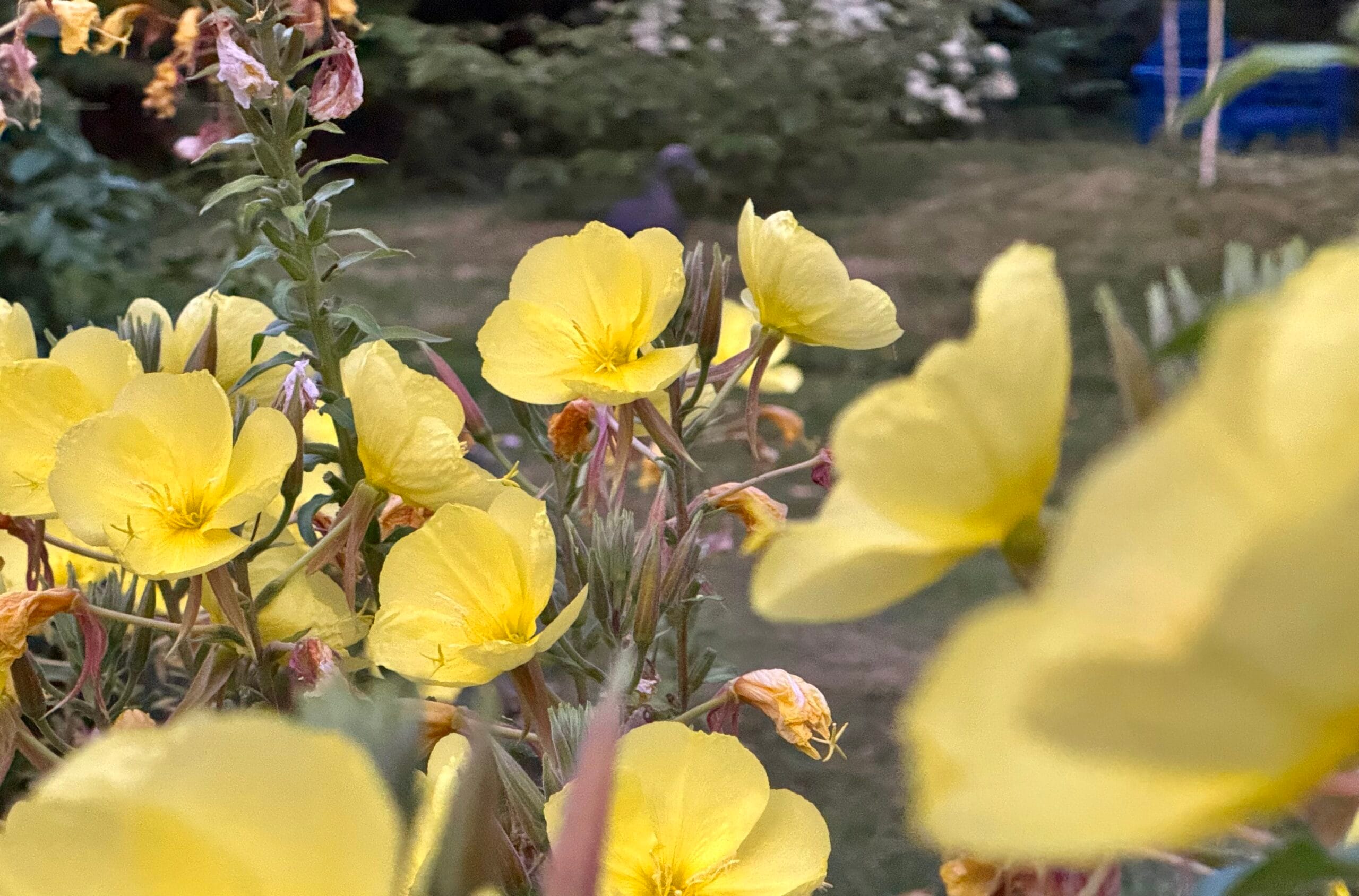
There is something mystical about flowers that open as sunlight fades at the end of a summer’s day. This is just what evening primroses do every evening at dusk, their pale-yellow flowers illuminated by the evening light. If you are patient, you can watch them slowly unfurl, one by one, for their single night of glory. Flowers of both species open as quickly as a minute and typically fade to orange red as they wilt in the heat of following morning. Their timing is perfect for the nocturnal insects they sustain, like hawk moths and elephant hawk moths and, in turn, bats.
We have two species of evening primrose here at Denmans: The common evening primrose (Oenothera biennis) which is native to eastern North America, and the fragrant evening primrose (Oenothera stricta), its South American cousin. Both species share the evening primrose family’s preference for poor, disturbed, sunbaked ground which makes them ideal for our gravel gardens. They are pioneer species and will colonise disturbed, bare ground helping to stabilise soil before other plants move in.
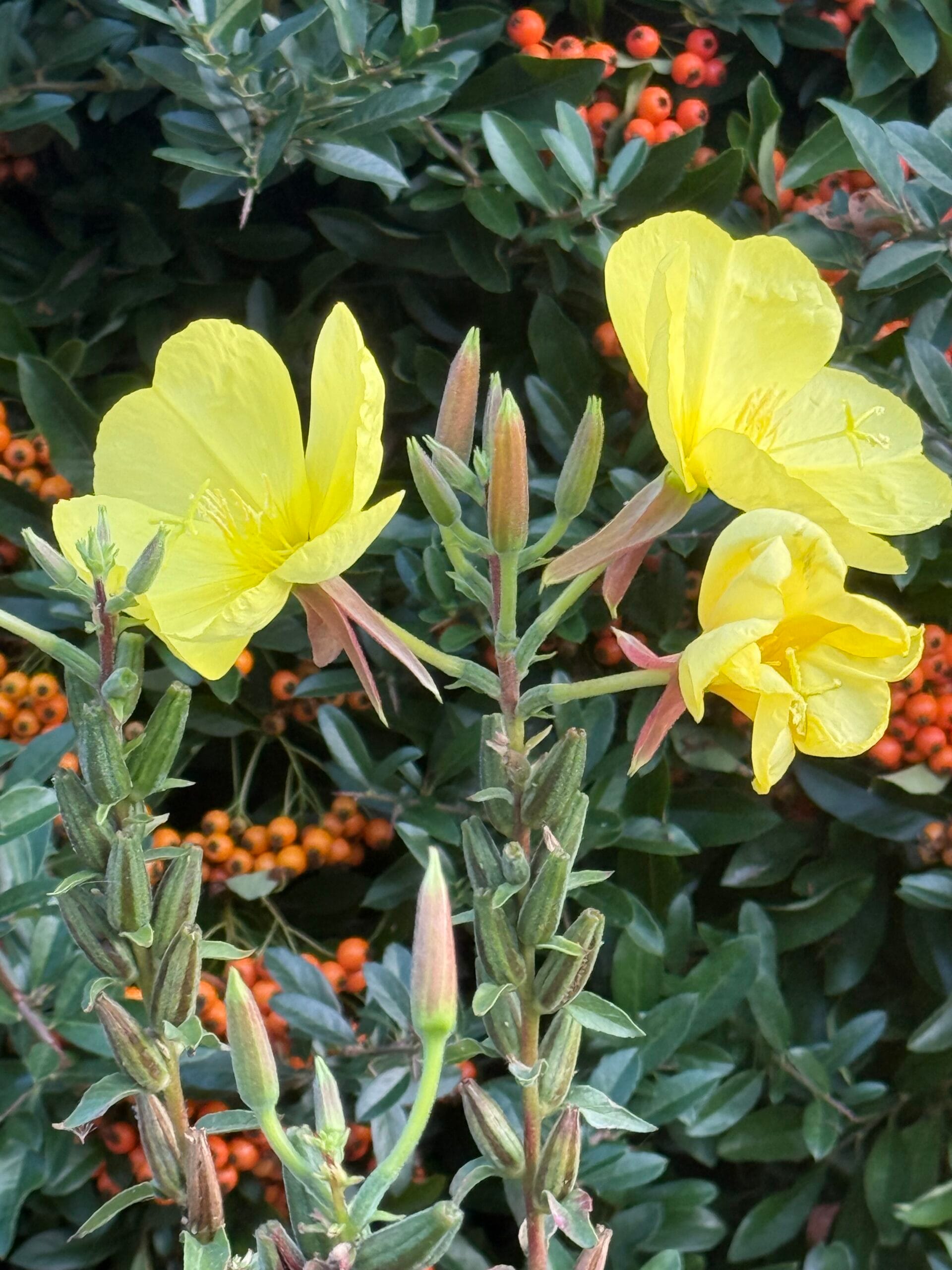
Oenothera biennis is blooms well into Autumn.
Of the two, the common evening primrose is the less fussy, hardier plant, thriving in poor well-drained soil, able to grow in part shade, and quite drought tolerant. It is a biennial that self-sows prolifically, forming a low rosette the first year and a 1-2 metre (3-6 foot) flower stalk the second which produces blooms well into Autumn. Although it grows in the small gravel garden at Clock House, it is a coarse plant and really lends itself to informal and larger spaces like the gravel garden in front of the Cottage. They are so lovely, however, I can’t bring myself to pull them out.
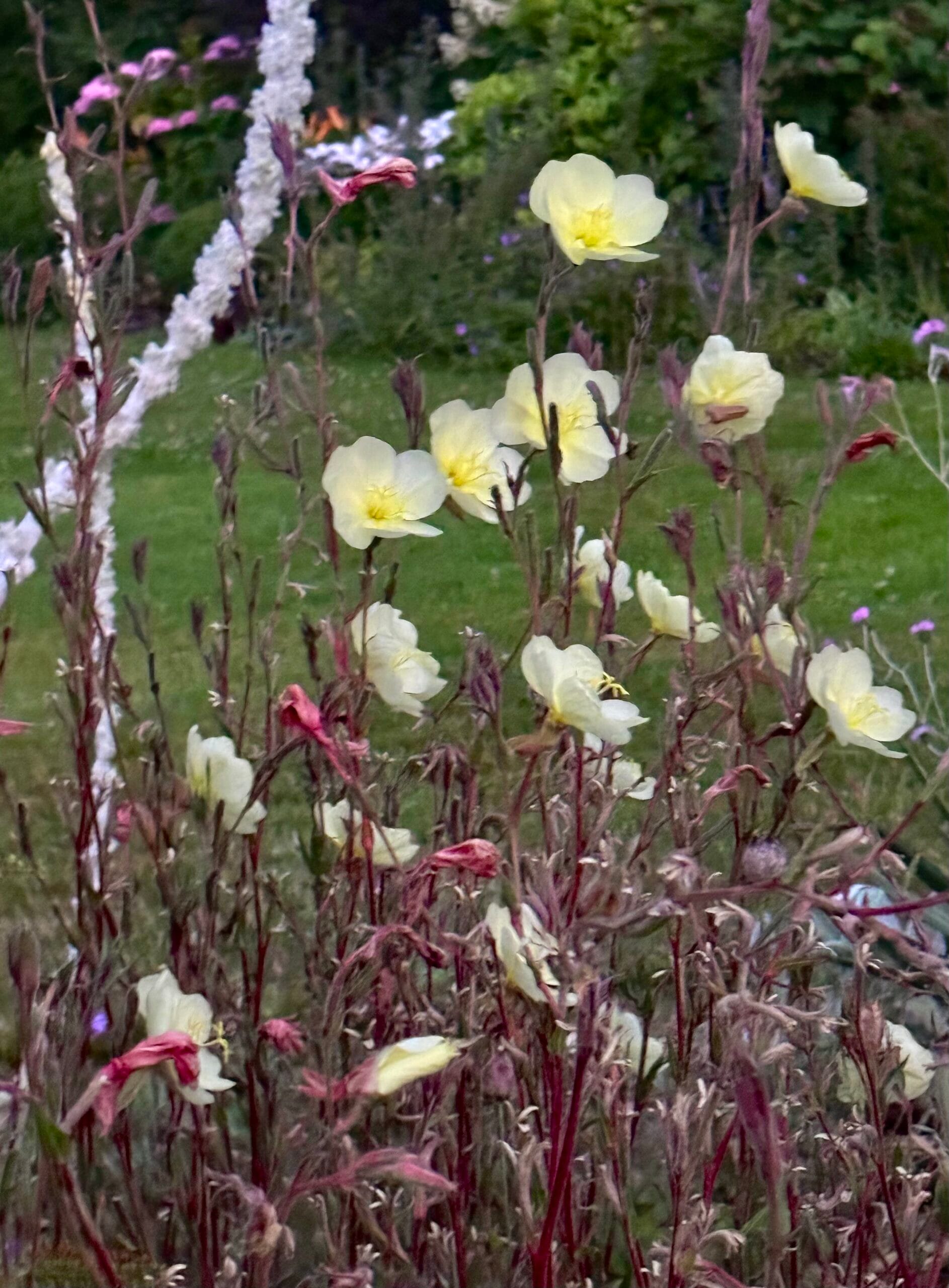
Oenothera stricta is more delicate than its cousin, Oenothera biennis.
The fragrant evening primrose is a more elegant plant. It is both shorter than its cousin growing only to 1- 1.5 metres (3-4 feet) tall, its foliage is finer, and its blossoms a paler, more delicate yellow. It also tolerates full sun and any well-drained soil but needs moderate watering in dry weather and is less hardy and needs protection from wind. It naturalises less aggressively than the common evening primrose which can also be a plus depending on how many you want in your garden. A short-lived perennial, its fragrance scents the night air from July through early Autumn.
The name Oenothera comes from the ancient Greek words for wine and ‘to seek or imbibe’; ‘biennis’ refers to biennial’; and ‘stricta’ means upright or narrow.
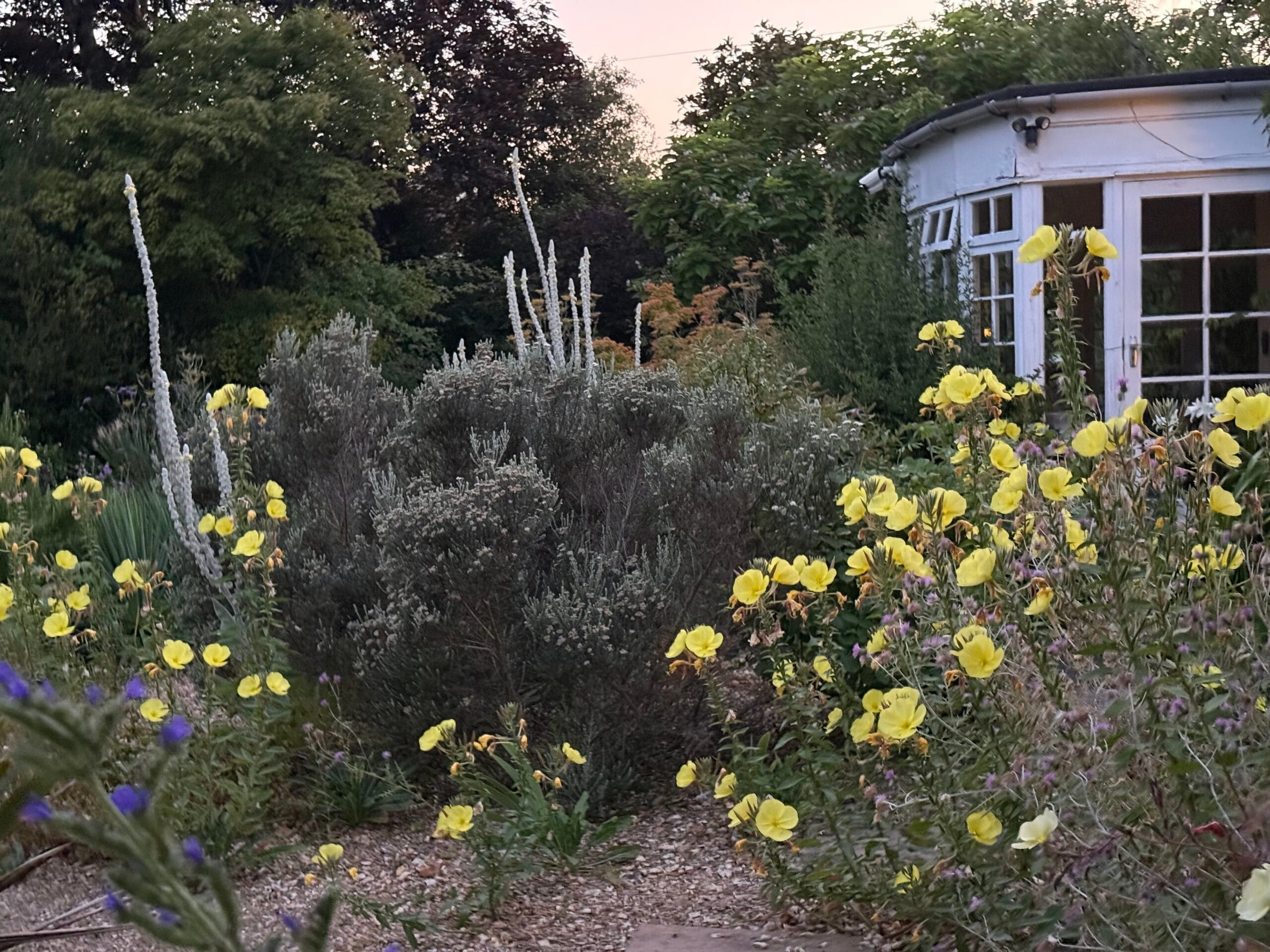
Both species of evening primrose at dusk in front of the Cottage.