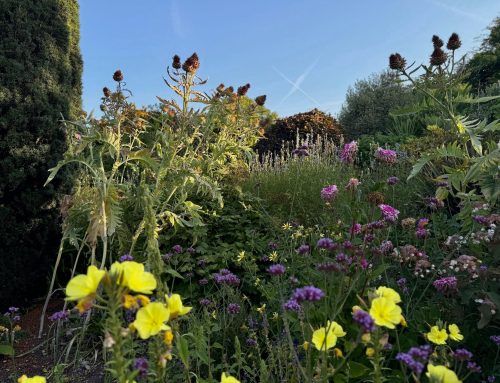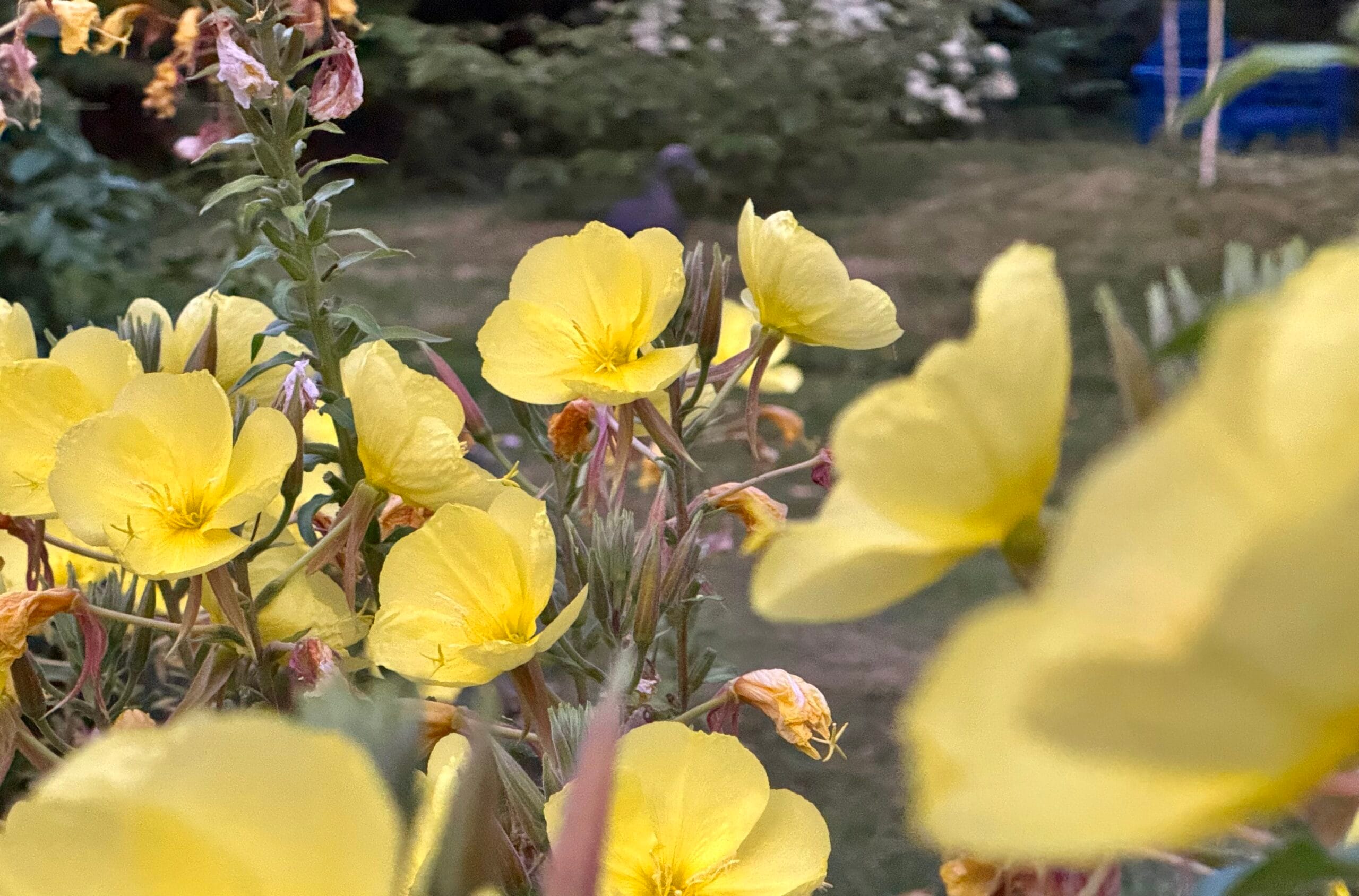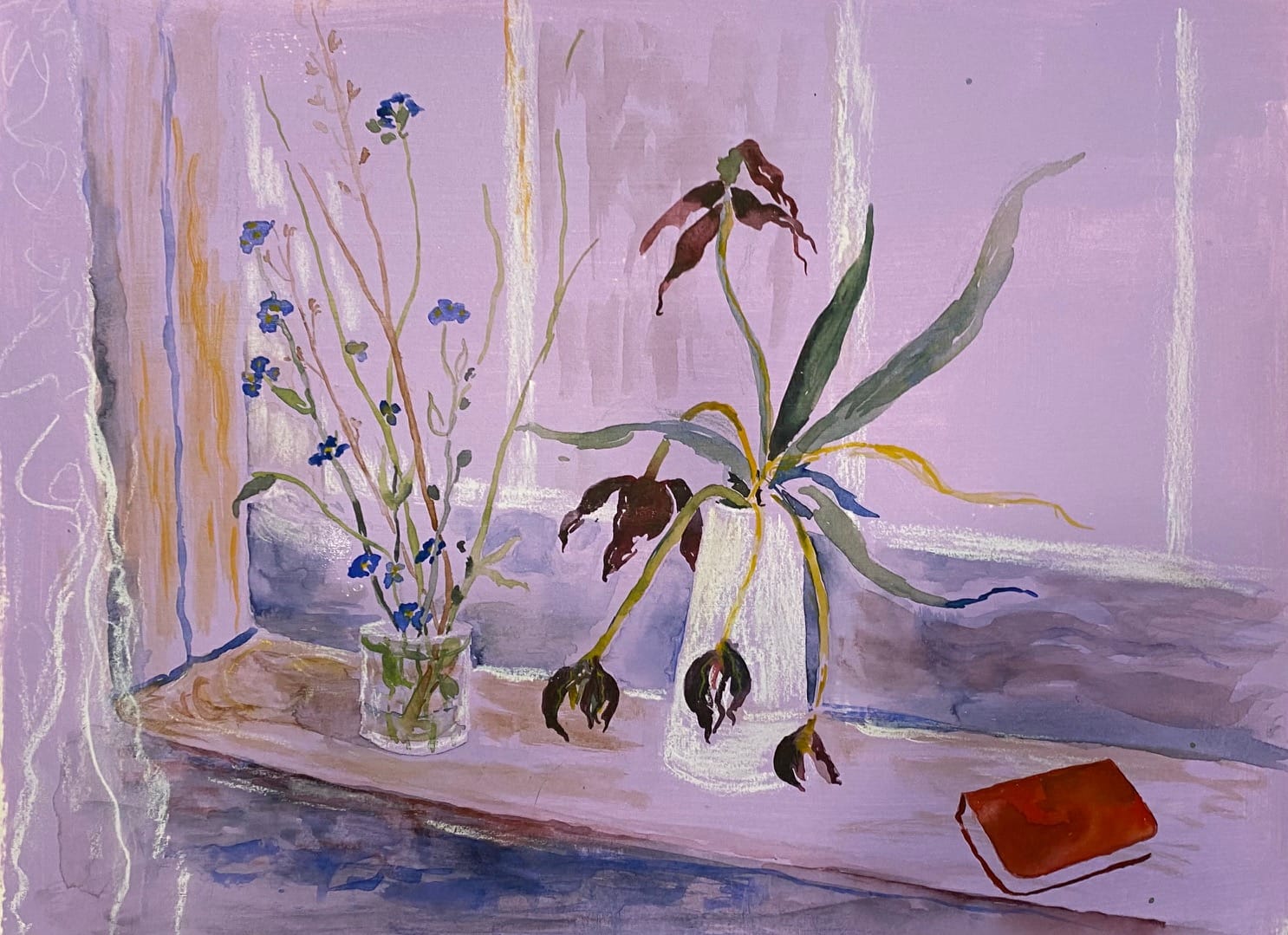
The conventional wisdom is that Autumn is about orange, red, brown, and yellow, a conviction supported by the changing colours in the countryside: yellowing grasses, colourful foliage, reddening berries, orange rosehips and so on.
Upon closer observation, however, Autumn is also very much about the colour purple.
This is an important revelation for those who have a hard time with Summer’s end, and who begin mourning its annual passing as early as the Summer Solstice. Purple flowering plants perpetuate the verisimilitude of Summer, creating the illusion that Summer hasn’t ended, even as the leaves start turning and pumpkins start appearing.
At Denmans we have a variety of plants that are perfect for sustaining this illusion.
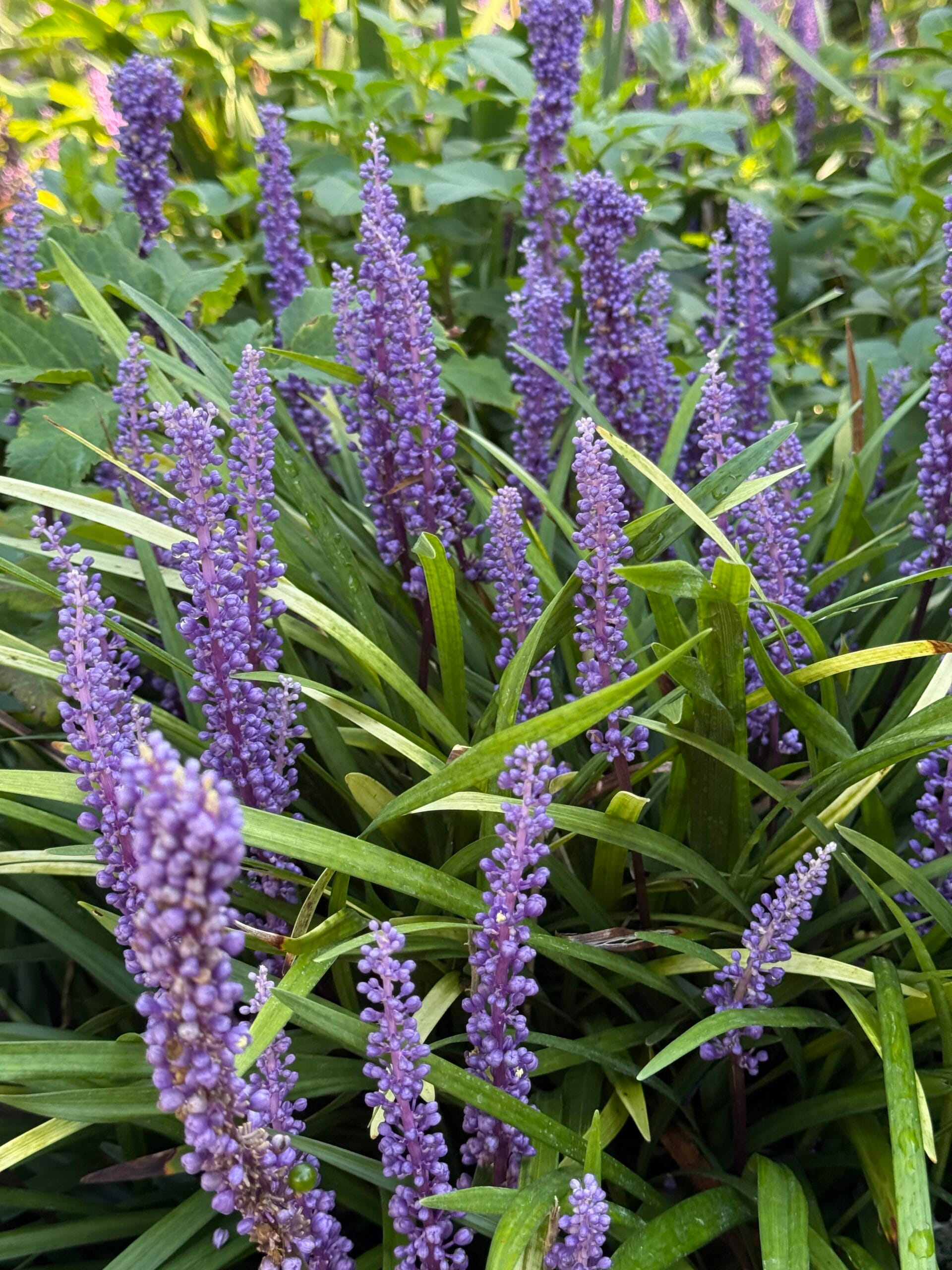
Liriope has evergreen grass-like foliage with spikes of tiny long-lasting flowers.
A favourite is Monkey Grass (Liriope muscari), an evergreen which thrives in a variety of exposures and produces stiff upright stems covered with tiny, intense purple flowers from August well into October. Liriope is a workhorse that reliably looks smart in all seasons and tolerates a lot of abuse. You can always tuck small bulbs through it for early spring interest. Just cut it back in late winter, before the new grass and bulb shoots appear, and the bulbs will take over. By the time they are done, the new grass shoots should be up.
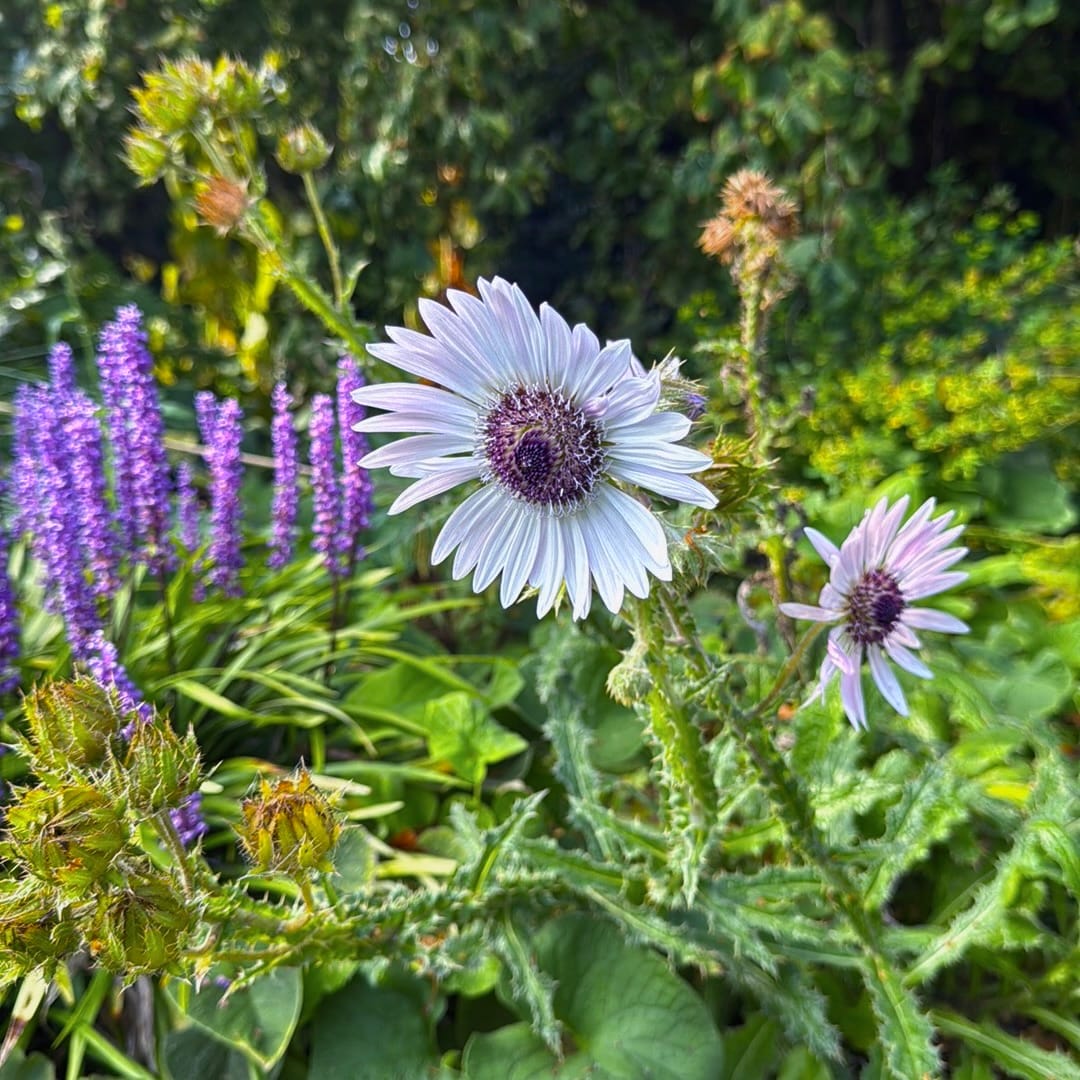
Berkheya purpurea makes a striking combination with liriope in the dry river bed.
Liriope also looks amazing with other plants. There is a clump in the riverbed growing beside an exotic, pale lavender South African thistle (Berkheya purpurea) and the combination is striking, both for the colour but also for the foliage contrast — spiky thistly leaves and strappy, grassy ones. The sizes and shapes of the flowers are also a remarkable pairing.
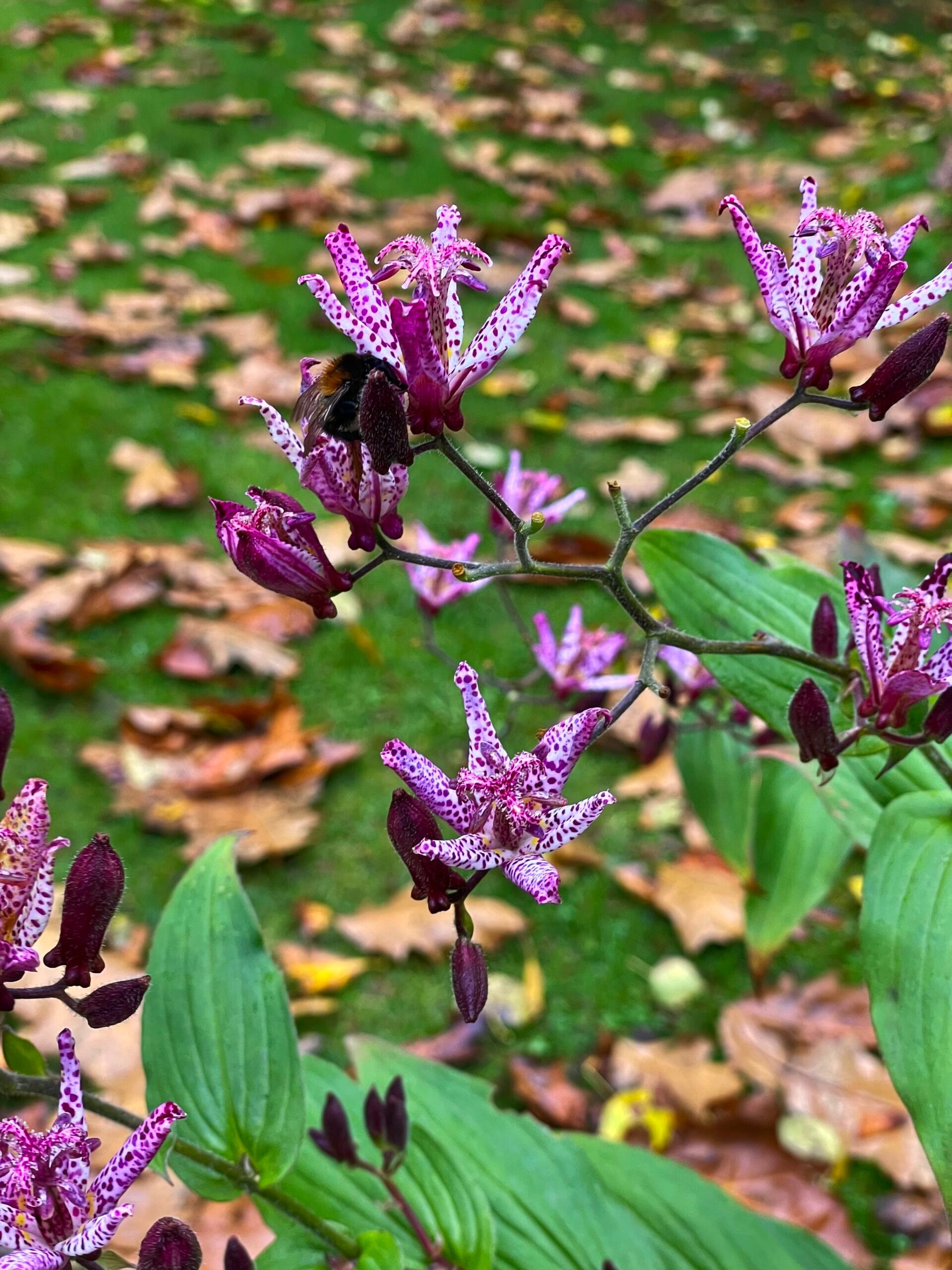
Toad lily should be massed to ensure that the small, orchid-like flowers stand out in a larger planting.
Another favourite here is Toad Lily (Tricyrtis hirta), which has long arching stems along which multiple pairs of narrow pointed leaves grow. This provides excellent architectural form all summer, and by late summer, buds appear just where the leaves meet the stem. By September, the swelling buds become small, exquisite orchid-like flowers, mottled with white, deep plum, and amethyst.
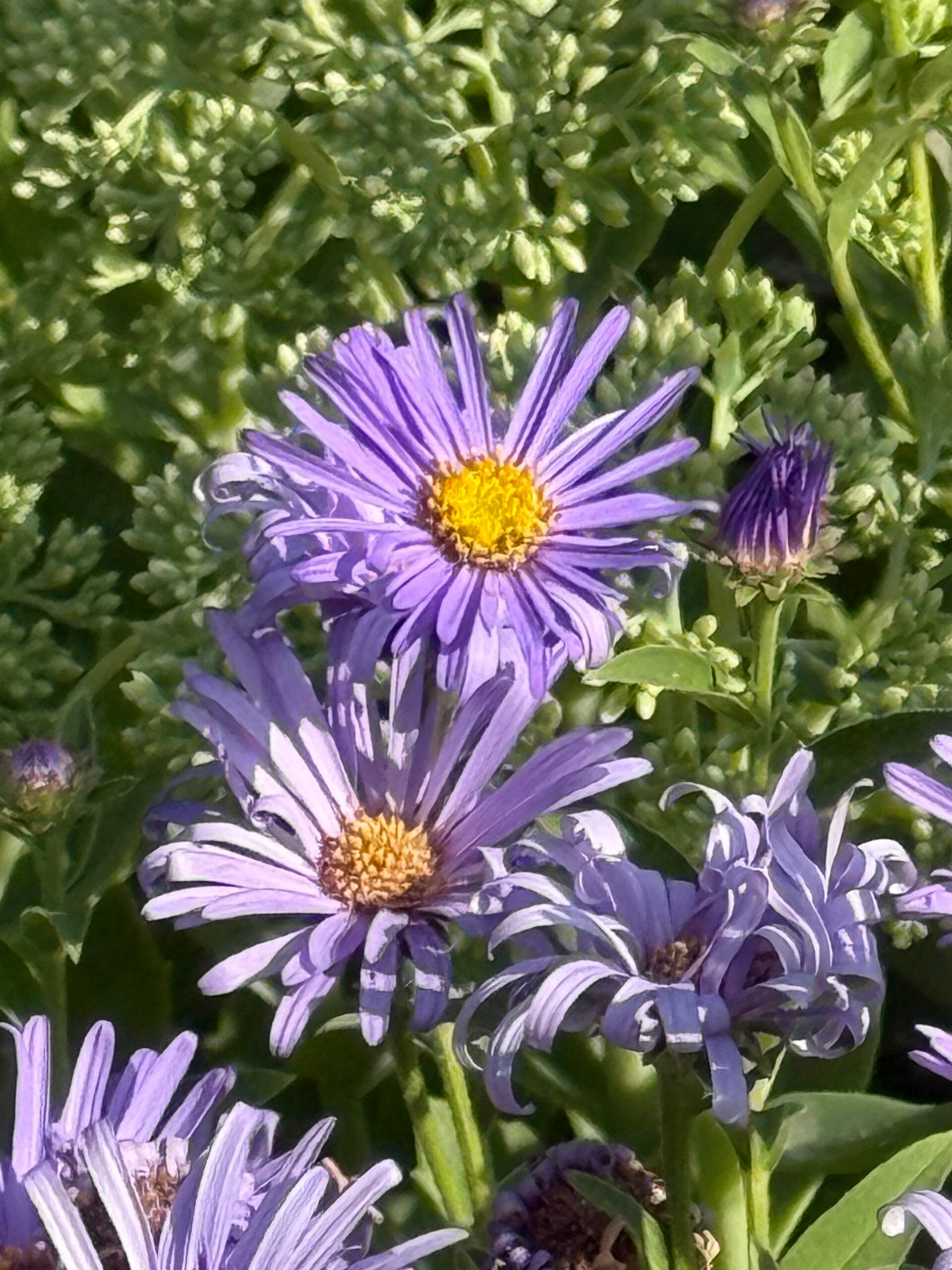
John loved Aster x frikartii ‘Monch’ (above), and we have been introducing different sorts of asters into the Garden in recent years.
We also love purple Michaelmas daisies (asters), which appeal
to a variety of pollinators and look amazing with oranges, reds, and yellows. John especially loved Aster × frikartii ‘Mönch’, which blooms for a good six weeks and looks especially fantastic combined with Autumn Joy stonecrop (Hylotelephium ‘Herbstfreude’). In the past few years we have added other asters, including Symphyotrichum ‘Prairie Purple’.
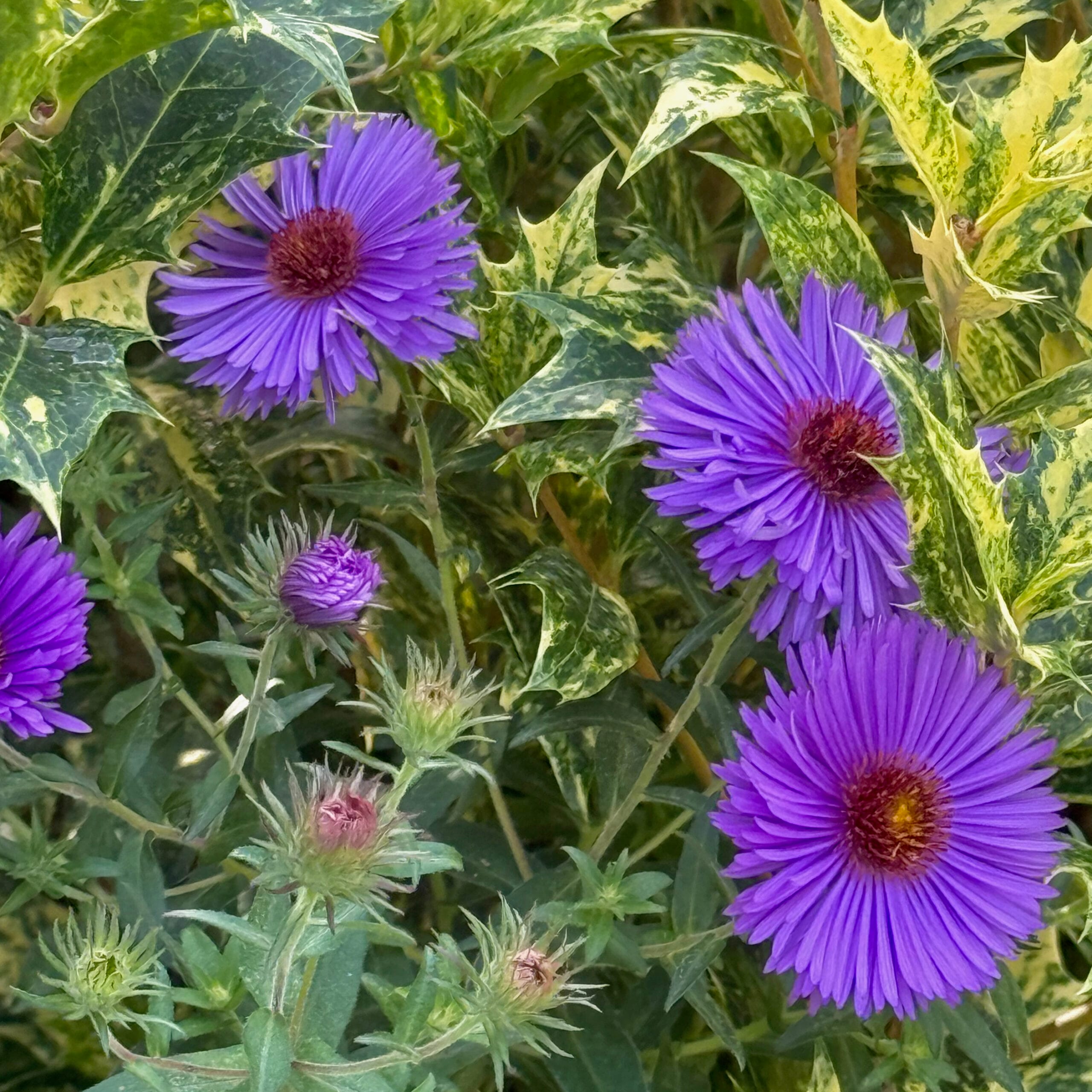 Throughout the Garden, clusters of Purple-top Vervain (Verbena bonariensis) have spread, blooming from early summer through November. Growing more than 1 m (3 ft) tall, it’s best planted in groups where bees and butterflies can hover dramatically over its tiny violet flowers. Drought tolerant, it
also looks wonderful in flower arrangements.
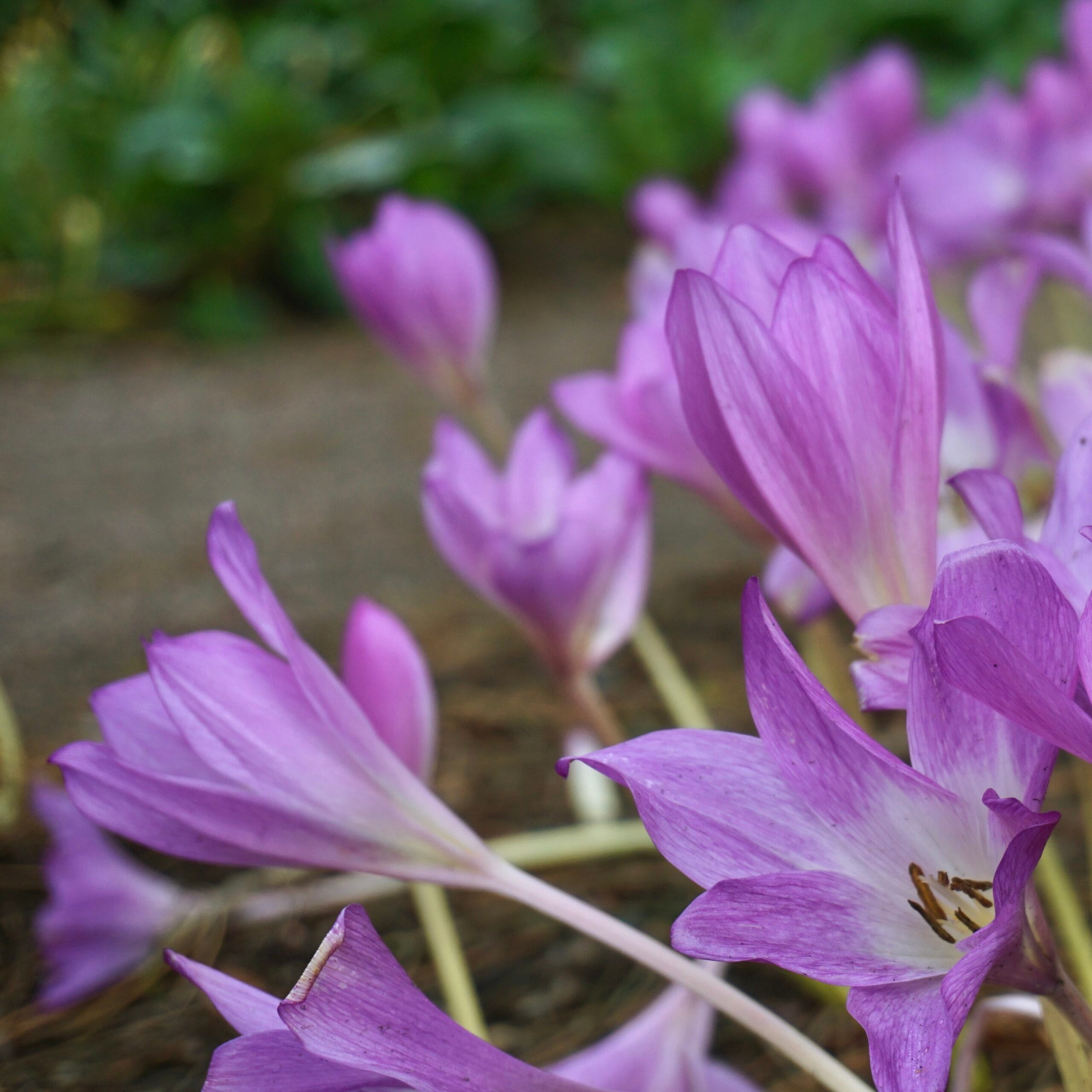
Colchicums are a blousy crocus-like bulb that adds an unexpected touch to the Garden.
Lavender autumn crocus (Colchicum autumnale) grows very well at Denmans in the gravel gardens and mixed beds, developing into larger clumps each year. Though not true crocuses, they look amazing with Geranium ‘Rozanne’ and just about any other autumn colour you can imagine.
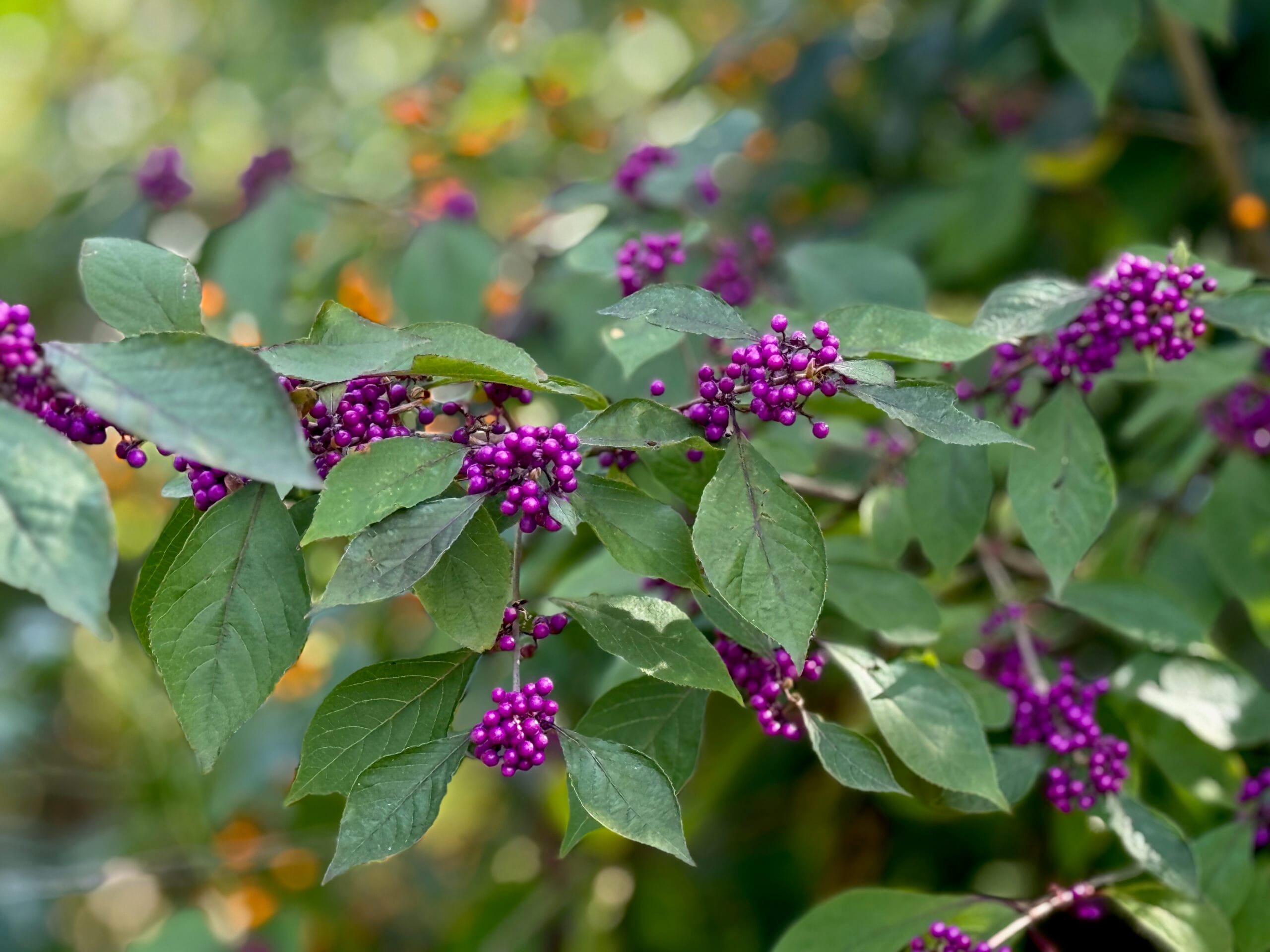
Finally, John’s beautyberry (Callicarpa bodinieri — see the opening photo), which had been obscured by rampant eleagnus and roses, and which I painstakingly liberated a couple of years ago, has put on an especially wonderful show this year. Native to China, it grows up to 3 m (10 ft) tall by 2.5 m (8 ft) wide and produces vibrant deep violet berries that persist for weeks, beginning at the end of August.
There are other flowering plants that fit into this category, all of which belie the calendar’s announcement that September has arrived and that the countryside is slowly transitioning to its classic Autumn hues. Purple plants provide us, if only temporarily, with the best of both worlds: an extended Summer, and the pleasures of pumpkins and leaf-strewn lawns and streets.
Who says you can’t have it both ways?