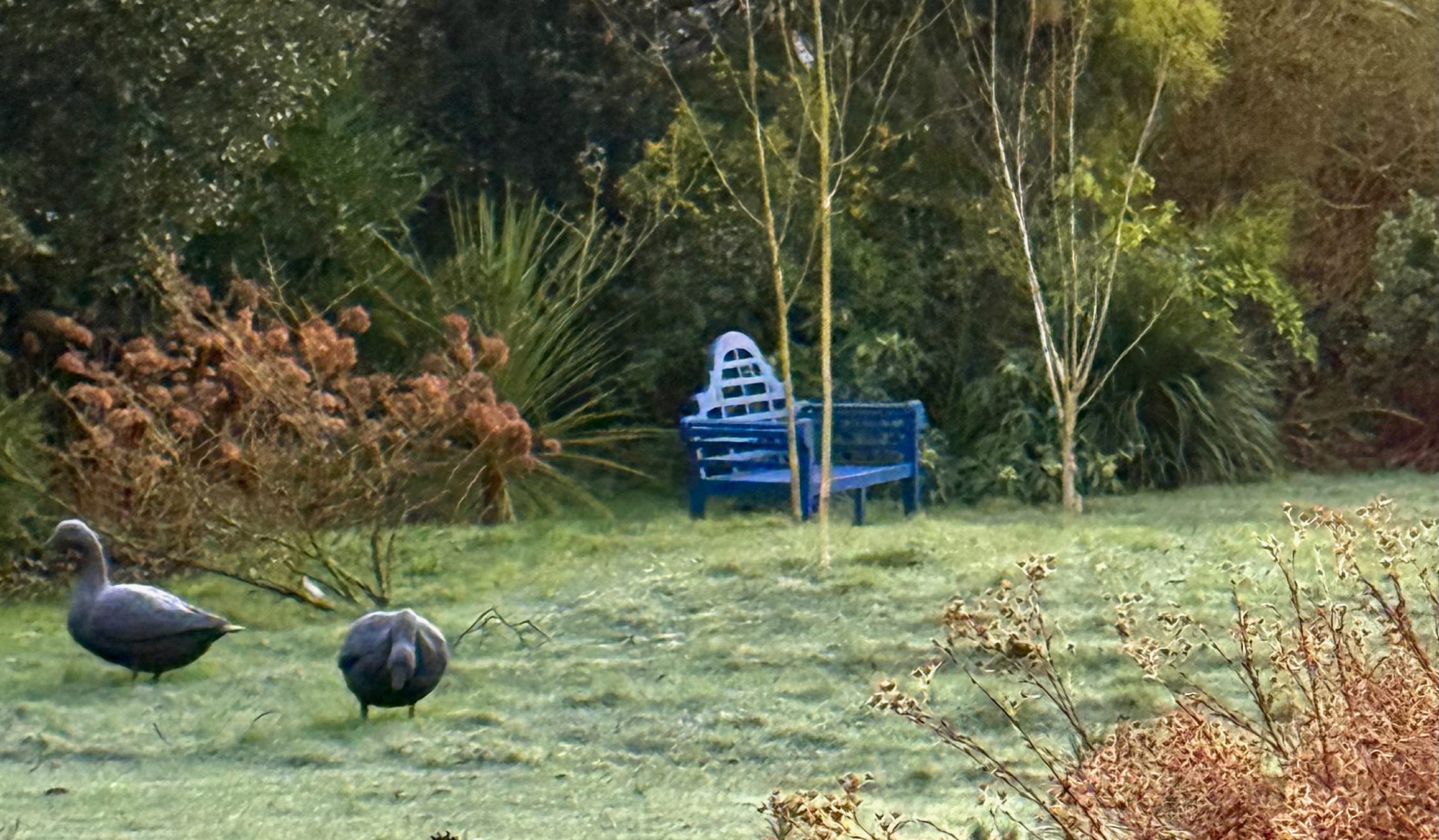
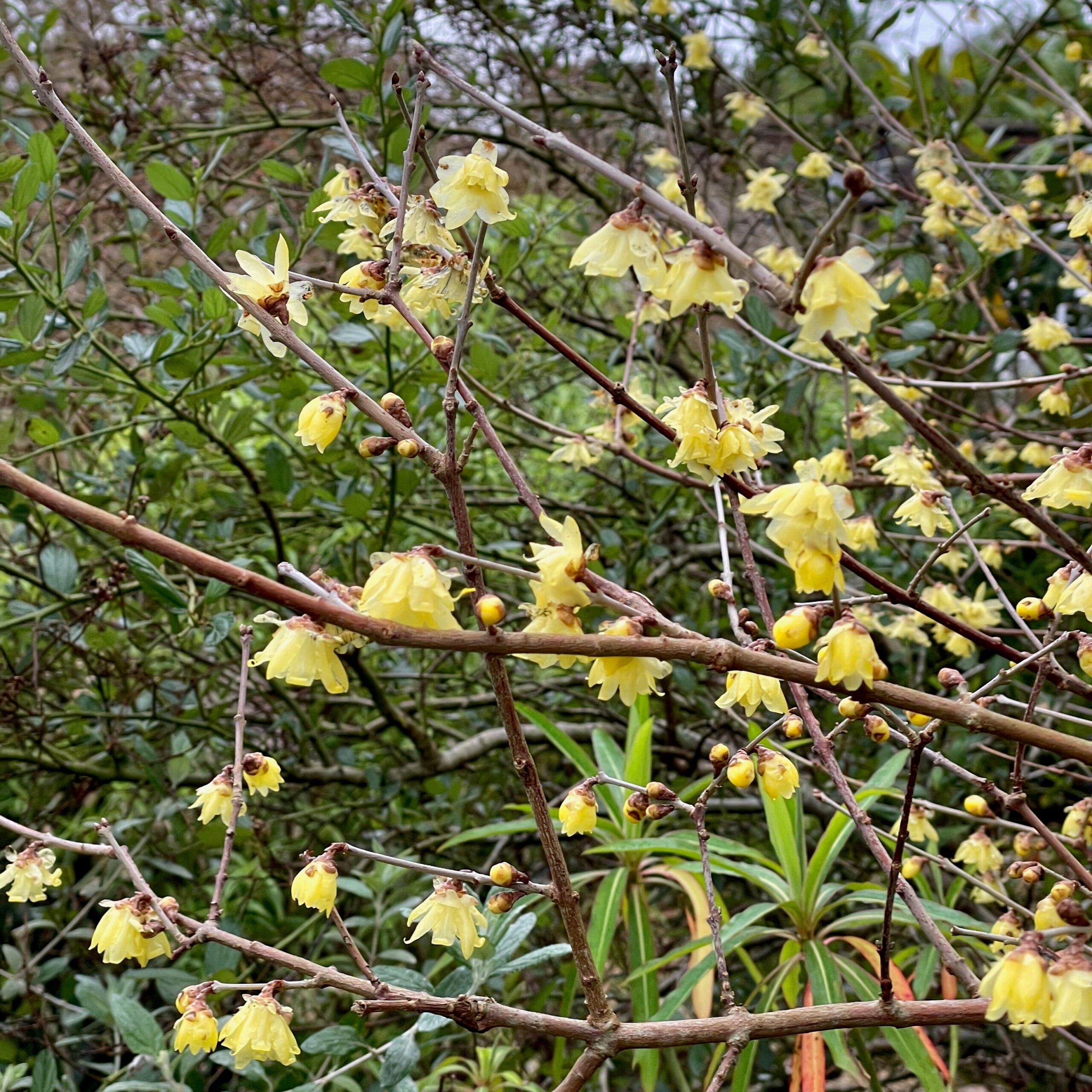
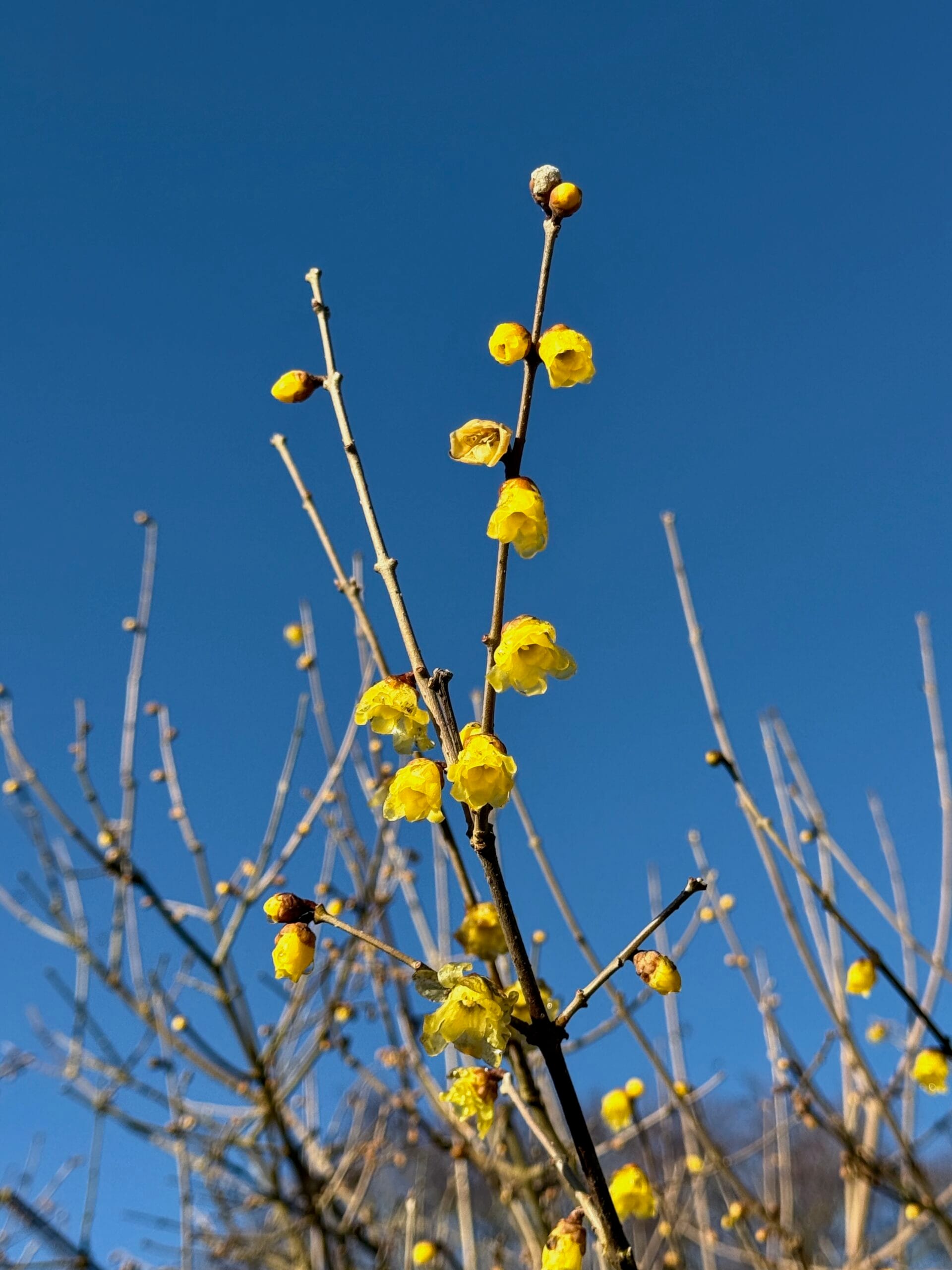
 I first came across wintersweet at a lovely old garden (Tudor Place) in Washington DC when I was just starting my caree in garden design. I was just as enchanted by its waxy pale-yellow flowers which were arrayed along its bare stems in winter as I was by its sweet perfume. Though that was longer ago than I’d like to admit, I have never lost my love for this shrub and am delighted that there are two mature specimens here at Denmans Garden. One grows in the Walled Garden and the other in front of the Cottage.
A winner of the RHS Award of Garden Merit, this is a slow growing, vase-shaped, deciduous shrub that plays a subtle structural role most of the year and really comes into its own in mid-winter when its bee-friendly flowers begin to open along its dark, bare stems. Though the blooms are not dramatic, wintersweet has a subtle and steadfast winter beauty and its fragrance on a warm day always slows visitors down as they meander through the Garden.
A native to mountainous regions in China, it is hardy to -15 °C (5°F), wintersweet does well in sheltered positions in combination with other plants that have attractive features at other times of year when it is not very interesting. I find that proximate shrubs with evergreen foliage especially enhance its delicate flowers.
Growing to about 3 metres (10 feet) tall and wide, wintersweet prefers moist, well-drained soil, and tolerates light pruning. It can take part shade as well as full sun and is generally free of pests.
Though parts of the plants are toxic, others contain essential oils and are used for medicinal purposes as well as in cosmetics and aromatherapy. In China it is even used to scent linens.
Its Latin name, ‘chimonanthus’ means ‘winter flower’ and ‘praecox’ means ‘very early’.